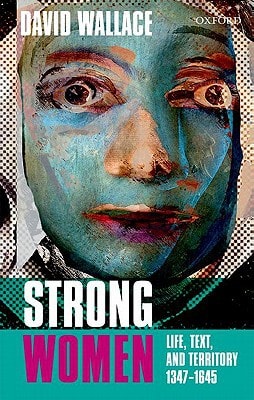
Strong Women: Life, Text, and Territory 1347-1645
0
0
As an Amazon Associate and affiliate partner, Menrva Books earns from qualifying purchases. Learn more
Author Description
It takes a strong woman to secure bookish remembrance in future times; to see her life becoming a life. David Wallace explores the lives of four Catholic women - Dorothea of Montau (1347-1394) and Margery Kempe of Lynn (c. 1373-c. 1440); Mary Ward of Yorkshire (1585-1645) and Elizabeth Cary of Drury Lane (c. 1585-1639) and and the fate of their writings. All four shock, surprise, and court historical danger. Dorothea of Montau punishes her body and spends all day in church; eight of her nine neglected children die. Kempe, mother of fourteen, empties whole churches with a piercing cry learned at Jerusalem. Ward, living holily but un-immured, is denounced as an Amazon, a chattering hussy, an Apostolic Virago, and a galloping girl. Cary, having left her husband torturing Catholics in Dublin castle, converts to Roman Catholicism in Irish stables in London. Each of these women is mulier fortis, a strong woman: had she been otherwise, Wallace argues, her life would never have been written. The earliest texts of these lives are mostly near-contemporaneous with the women they represent, but their public reappearances have been partial and episodic, with their own complex histories.The lives of these strong women continue to be rewritten long after this premodern period. Incipient European war determines what Kempe must represent between her first discovery in 1934 and full publication in 1940. Dorothea of Montau, first promoted to counter eastern paganism, becomes a bastion against Bolshevism in the 1930s; her cult's meaning is fought out between Gunter Grass and Josef Ratzinger. Cary's Catholic daughters, Benedictine nuns, must write of their mother as if she were a saint. Ward's work is not yet done: her followers, having won the right not to be enclosed, must now enter the closed spaces of Roman clerical power.
Menrva's Summary
THE THESIS
This work investigates the historical conditions and textual legacies that allowed four specific Catholic women to secure lasting remembrance in the premodern era. David Wallace, a scholar of medieval and early modern literature, utilizes a comparative biographical framework to analyze the lives and writings of Dorothea of Montau, Margery Kempe, Mary Ward, and Elizabeth Cary. He argues that these women were categorized as 'mulier fortis'—strong women—whose unconventional actions and religious defiance necessitated the creation of written records to define, contain, or celebrate their legacies across centuries.
THE SCOPE MAP
What You Will Find
- Biographical analysis of four Catholic women spanning the years 1347 to 1645.
- Examination of the intersection between religious devotion, gender roles, and the production of life-writing.
- Historical investigation into how the reception of these women's texts shifted during the 20th century, influenced by political and religious contexts.
- Analysis of the tension between the women's lived experiences and the subsequent narratives constructed by their followers, critics, and hagiographers.
THE AUTHORITY PERSPECTIVE
Scholars and historians frequently note the academic rigor and interdisciplinary approach Wallace applies to these complex historical figures. The text is recognized as a significant contribution to the study of premodern life-writing and the historiography of religious women.
Page Count:
320
Publication Date:
2011-06-04
Publisher:
Oxford University Press
ISBN-10:
019954171X
ISBN-13:
9780199541713
History
Religion
Biography
In literature
Literary Criticism
Community Tags
Similar Books