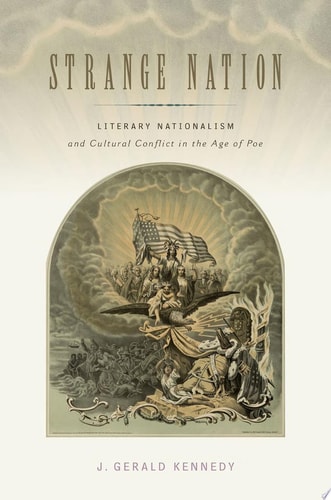
Strange Nation: Literary Nationalism and Cultural Conflict in the Age of Poe
0
0
As an Amazon Associate and affiliate partner, Menrva Books earns from qualifying purchases. Learn more
Author Description
After the War of 1812, Americans belatedly realized that they lacked national identity. The subsequent campaign to articulate nationality transformed every facet of culture from architecture to painting, and in the realm of letters, literary jingoism embroiled American authors in the heated politics of nationalism. The age demanded stirring images of U.S. virtue, often achieved by contriving myths and obscuring brutalities. Between these sanitized narratives of the nation and U.S. social reality lay a grotesque discontinuity: vehement conflicts over slavery, Indian removal, immigration, and territorial expansion divided the country. Authors such as Washington Irving, James Fenimore Cooper, Catharine M. Sedgwick, William Gilmore Simms, Nathaniel Hawthorne, and Lydia Maria Child wrestled uneasily with the imperative to revise history to produce national fable. Counter-narratives by fugitive slaves, Native Americans, and defiant women subverted literary nationalism by exposing the plight of the unfree and dispossessed. And with them all, Edgar Allan Poe openly mocked literary nationalism and deplored the celebration of "stupid" books appealing to provincial self-congratulation. More than any other author, he personifies the contrary, alien perspective that discerns the weird operations at work behind the facade of American nation-building.
Menrva's Summary
THE THESIS
How did the imperative to construct a cohesive American national identity during the early 19th century shape the literary output and cultural conflicts of the era? J. Gerald Kennedy, a scholar of 19th-century American literature, examines the tension between the state-sponsored drive for national myth-making and the fragmented social reality of the United States. He argues that authors were forced to navigate a landscape defined by the suppression of uncomfortable truths—such as slavery and territorial expansion—while attempting to forge a unified national fable. By analyzing the works of major figures alongside marginalized voices, Kennedy demonstrates how the literary field became a primary site for the negotiation of American identity.
THE SCOPE MAP
What You Will Find
- Analysis of literary nationalism following the War of 1812.
- Examination of works by Washington Irving, James Fenimore Cooper, Nathaniel Hawthorne, and Edgar Allan Poe.
- Investigation of counter-narratives produced by fugitive slaves, Native Americans, and women writers.
- Discussion of the role of cultural institutions in promoting nationalistic myths.
Scope Limits
- The study focuses primarily on the period leading up to and including the age of Poe.
- It does not provide an exhaustive history of American political institutions, focusing instead on their reflection in literature.
THE AUTHORITY PERSPECTIVE
Scholars recognize this work as a significant contribution to the study of antebellum American literature and the intersection of politics and aesthetics. Readers frequently note the academic density of the prose, which provides a rigorous framework for understanding the complexities of 19th-century national identity.
Page Count:
471
Publication Date:
2016-01-01
Publisher:
Oxford University Press
ISBN-10:
0190491280
ISBN-13:
9780190491284
History
English
Literary Criticism
United States
American History
In literature
History of the Americas
Nationalism
19th Century
English & College Success
Community Tags
Similar Books