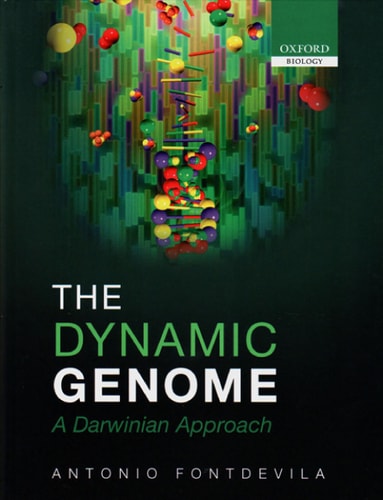
The Dynamic Genome: A Darwinian Approach
0
0
As an Amazon Associate and affiliate partner, Menrva Books earns from qualifying purchases. Learn more
Author Description
Our ever-increasing knowledge of whole genome sequences is unveiling a variety of structures and mechanisms that impinge on current evolutionary theory. The origin of species, the evolution of form, and the evolutionary impact of transposable elements are just a few of the many processes that have been revolutionized by ongoing genome studies. These novelties, among others, are examined in this book in relation to their general significance for evolution, emphasising their human relevance. The predominance of non-coding DNA in the human genome, the long-term adaptive role of so called "junk DNA" in the evolution of new functions, and the key evolutionary differences that define our humanity are just some of the controversial issues that this book examines in the context of Darwinian evolution. The author's principle intention is to show that whilst genomics is revealing new and previously unanticipated mechanisms and sources of variability that must be incorporated into evolutionary theory, there is no reason to dismiss the role of natural selection as the mechanism that sorts out these potentialities. In other words, this genome potential provides new possibilities (and also constraints) for evolution, but the realization of this potential is driven by natural selection.
Menrva's Summary
THE THESIS
This book investigates how recent discoveries in genomics, such as transposable elements and non-coding DNA, can be integrated into the existing framework of Darwinian evolutionary theory. Antonio Fontdevila, a specialist in evolutionary genetics, synthesizes current genomic data to argue that while these new mechanisms provide novel sources of variability, natural selection remains the primary force directing evolutionary outcomes. The text addresses the tension between traditional Darwinian models and modern genomic findings, ultimately proposing a unified view of biological change.
THE SCOPE MAP
What You Will Find
- Analysis of the evolutionary impact of transposable elements and non-coding DNA.
- Examination of the origin of species and the evolution of biological form through a genomic lens.
- Discussion of the specific genetic differences that define human evolution.
- A theoretical framework reconciling genomic potential with the mechanism of natural selection.
THE AUTHORITY PERSPECTIVE
Experts recognize this work as a significant contribution to the ongoing dialogue between classical evolutionary theory and modern molecular biology. Readers frequently note the academic density of the prose, which is best suited for students and professionals in the biological sciences.
Page Count:
248
Publication Date:
2011-07-28
Publisher:
Oxford University Press
ISBN-10:
019954137X
ISBN-13:
9780199541379
Science
Evolution
Genomics
Biology
Genomes
Evolutionary Biology
Genetics
Community Tags
Similar Books