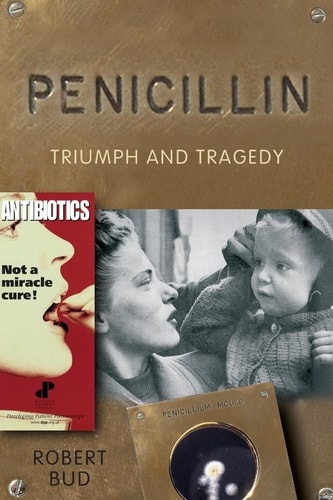
Penicillin: Triumph and Tragedy
0
0
As an Amazon Associate and affiliate partner, Menrva Books earns from qualifying purchases. Learn more
Author Description
Penicillin is the drug of the twentieth century. It was the first of the antibiotics that, for decades after the Second World War, underpinned a popular belief that the threat of infectious disease had at last met its match. With the emergence of 'superbugs' these hopes have faded. Robert Bud pulls these different but conjoined stories into a compelling narrative: using a wealth of new research, he sets the discovery and use of penicillin in the broader context of social and cultural change across the world. His book will be of great interest to historians, scientists, and anyone wishing to understand this drug's seismic impact on our lives.
Menrva's Summary
THE THESIS
This book investigates the historical trajectory of penicillin, examining how its initial status as a medical miracle evolved into a complex narrative of both triumph and the subsequent rise of antibiotic resistance. Robert Bud, a historian of science and technology, utilizes extensive archival research to situate the development of penicillin within the broader social and cultural shifts of the twentieth century. He argues that the drug's history is not merely a technical achievement but a reflection of changing human attitudes toward infectious disease and the limits of medical intervention.
THE SCOPE MAP
What You Will Find
- Historical analysis of the discovery and mass production of penicillin during and after the Second World War.
- Examination of the cultural shift from the mid-century optimism regarding antibiotics to the modern crisis of superbugs.
- Integration of social history with scientific development to explain the drug's global impact.
- Case studies detailing the public perception and institutional handling of antibiotic use over several decades.
THE AUTHORITY PERSPECTIVE
Experts and historians recognize this work as a comprehensive account that successfully bridges the gap between technical medical history and social commentary. Readers frequently note the academic rigor of the prose, which provides a balanced view of the drug's legacy without oversimplifying the complexities of modern antibiotic resistance.
Page Count:
330
Publication Date:
2009-02-15
Publisher:
Oxford University Press
ISBN-10:
0199541612
ISBN-13:
9780199541614
Biography
Science
History
Antibiotics
Technology
Medicine
Penicillin
Community Tags
Similar Books