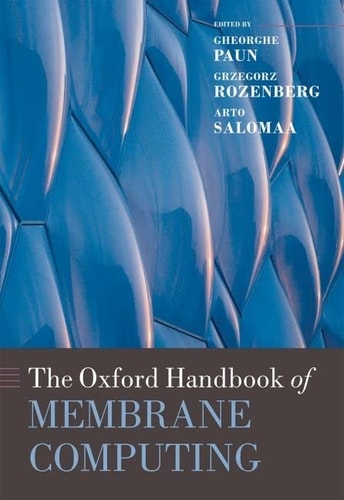
The Oxford Handbook of Membrane Computing
0
0
As an Amazon Associate and affiliate partner, Menrva Books earns from qualifying purchases. Learn more
Author Description
Part of the broader research field of natural computing, Membrane Computing is an area within computing science that aims to abstract computing ideas and models from the structure and functioning of living cells, as well as from the way the cells are organized in tissues or higher order structures. It studies models of computation (known as P systems) inspired by the biochemistry of cells, in particular by the role of membranes in the compartmentalization of living cells into "protected reactors".This handbook provides both a comprehensive survey of available knowledge and established research topics, and a guide to recent developments in the field, covering the subject from theory to applications. The handbook is suitable both for introducing novices to this area of research, and as a main source of reference for active researchers. It sets out the necessary biological and formal background, with the introductory chapter serving as a gentle introduction to and overview of membrane computing. Individual chapters, written by leading researchers in membrane computing, present the state of the art of all main research trends and include extensive bibliographies.
Menrva's Summary
THE THESIS
This handbook investigates the theoretical foundations and practical applications of membrane computing, a branch of natural computing that models computational processes based on the structure and function of biological cells. The authors, Arto Salomaa, Gheorghe Paun, and Grzegorz Rozenberg, compile contributions from leading experts to establish a formal framework for P systems. By bridging the gap between biochemistry and computer science, the text provides a systematic overview of how cellular compartmentalization informs modern algorithmic design.
THE SCOPE MAP
What You Will Find
- Formal definitions of P systems and their computational models.
- Analysis of biological structures as inspiration for membrane-based computing architectures.
- Comprehensive surveys of current research trends and theoretical developments.
- Extensive bibliographies for further academic inquiry into natural computing.
THE AUTHORITY PERSPECTIVE
Experts recognize this volume as a foundational reference for both students and active researchers in the field of natural computing. Readers frequently note the academic density of the prose, which effectively balances introductory biological concepts with advanced computational theory.
Page Count:
696
Publication Date:
2010-02-28
Publisher:
Oxford University Press
ISBN-10:
0199556679
ISBN-13:
9780199556670
Science
Biology
Reference
Computer Science
Mathematics
Community Tags
Similar Books