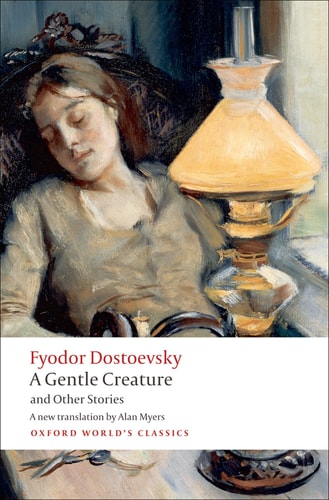
A Gentle Creature and Other Stories: White Nights; A Gentle Creature; The Dream of a Ridiculous Man
0
0
As an Amazon Associate and affiliate partner, Menrva Books earns from qualifying purchases. Learn more
Author Description
In these stories, Dostoevsky explores both the figure of the dreamer divorced from reality, and also his own ambiguous attitude toward utopianism, themes central to his great novels. In White Nights, the apparent idyll of the dreamer's romantic fantasies disguises profound loneliness and estrangement from "living life." A Gentle Creature and The Dream of a Ridiculous Man show how withdrawal from reality can end in spiritual desolation as well as moral indifference, and how, in Dostoevsky's view, the tragedy of the alienated individual can only be resolved by the rediscovery of a sense of compassion and responsibility toward other people.No other edition brings together these specific stories--which are most interesting when read alongside one another--and the new translations capture all the power and lyricism of Dostoevsky's writing at its best.About the Series: For over 100 years Oxford World's Classics has made available the broadest spectrum of literature from around the globe. Each affordable volume reflects Oxford's commitment to scholarship, providing the most accurate text plus a wealth of other valuable features, including expert introductions by leading authorities, voluminous notes to clarify the text, up-to-date bibliographies for further study, and much more.
Menrva's Summary
THE PULSE
The central conflict involves the psychological isolation of the individual as they struggle to reconcile their internal fantasies with the harsh realities of human connection. Each story features a protagonist who retreats into a private world of dreams or intellectual detachment, only to face the consequences of their alienation. Dostoevsky employs a first-person narrative framework to expose the internal monologues of these characters, forcing the reader to confront the moral and spiritual implications of their withdrawal from society. The narratives operate within a framework of existential inquiry, where the physical world serves as a mirror for the characters' internal desolation.
INSIDE THE PAGES
- Exploration of the 'dreamer' archetype as a manifestation of social estrangement.
- Use of unreliable narration to reflect the protagonist's fractured mental state.
- Examination of the tension between utopian idealism and individual moral responsibility.
- Focus on the psychological consequences of prolonged loneliness and social withdrawal.
- Integration of existentialist themes regarding the meaning of human suffering.
- Stylistic emphasis on the internal monologue to reveal character motivations.
- Critique of moral indifference as a byproduct of intellectual arrogance.
- Thematic resolution centered on the necessity of compassion and human connection.
THE COLLECTIVE ECHO
Discussion often centers on the recurring motif of the alienated individual and how these stories serve as a microcosm for the broader philosophical concerns found in Dostoevsky's major novels. Readers frequently highlight the author's ability to render the internal landscape of his characters with clinical precision, making the psychological shifts feel both inevitable and unsettling. Critics often note the balance between the lyrical prose and the stark, often bleak, thematic focus on spiritual desolation. The collection is widely regarded as a significant entry point for those interested in the evolution of Dostoevsky's thought regarding human responsibility and the dangers of romanticized isolation.
Page Count:
132
Publication Date:
2009-07-26
Publisher:
Oxford University Press
ISBN-10:
0199555087
ISBN-13:
9780199555086
Classic Literature
Philosophical
Short Stories
Psychological
Russian