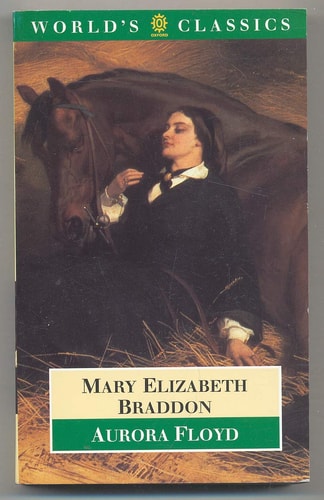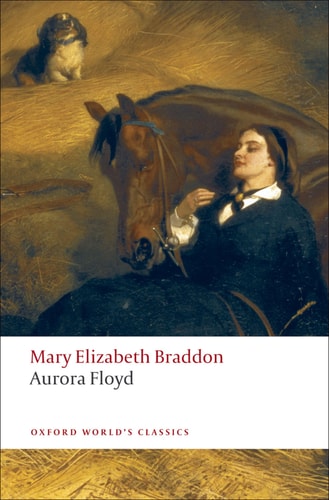
Aurora Floyd
0
0
As an Amazon Associate and affiliate partner, Menrva Books earns from qualifying purchases. Learn more
Author Description
With Lady Audley's Secret, Mary Elizabeth Braddon had established herself, alongside Wilkie Collins and Mrs Henry Wood, as one of the ruling triumvirate of `sensation novelists'. Aurora Floyd (1862-3), following hot on its heels, achieved almost equal popularity and notoriety.Like Lady Audley, Aurora is a beautiful young woman bigamously married and threatened with exposure by a blackmailer. But in Aurora Floyd, and in many of the novels written in imitation of it, bigamy is little more than a euphemism, a device to enable the heroine, and vicariously the reader, to enjoy the forbidden sweets of adultery without adulterous intentions. Passionate, sometimes violent, Aurora does succeed in enjoying them, her desires scarcely chastened by her disastrous first marriage. She represents a challenge to the mid-Victorian sexual code, and particularly to the feminine ideal of simpering, angelic young ladyhood.P. D. Edward's introduction evaluates the novel's leading place among `bigamy-novels' and Braddon's treatment of the power struggle between the sexes, as well as considering the similarities between the author and her heroine.About the Series: For over 100 years Oxford World's Classics has made available the broadest spectrum of literature from around the globe. Each affordable volume reflects Oxford's commitment to scholarship, providing the most accurate text plus a wealth of other valuable features, including expert introductions by leading authorities, voluminous notes to clarify the text, up-to-date bibliographies for further study, and much more.
Menrva's Summary
THE PULSE
The central conflict arises when Aurora Floyd, a spirited and independent heiress, finds her secret past as a bigamist threatened by a ruthless blackmailer. Aurora is a woman of intense passions who defies the rigid social expectations of mid-Victorian England, placing her in direct opposition to the patriarchal structures that demand female submissiveness. The narrative follows her attempts to maintain her new life while navigating the consequences of her impulsive first marriage. The story is presented through a third-person perspective that emphasizes the tension between public reputation and private desire, utilizing the conventions of the sensation novel to heighten the stakes of Aurora's predicament.
INSIDE THE PAGES
- Exploration of bigamy as a central plot device to challenge Victorian morality
- Portrayal of a non-traditional, assertive female protagonist
- Use of blackmail as a catalyst for psychological tension
- Detailed examination of class dynamics and social status
- Incorporation of suspenseful, fast-paced narrative sequences
- Critique of the Victorian feminine ideal of angelic submissiveness
- Focus on the power struggle between male and female characters
- Atmospheric depiction of mid-19th-century English country life
THE COLLECTIVE ECHO
Discussion often centers on how Braddon utilizes the sensation genre to subvert contemporary gender roles and expectations. Readers frequently highlight the contrast between Aurora's vibrant, sometimes violent personality and the more passive heroines common in literature of the period. Critics often examine the novel's pacing, noting its effectiveness in maintaining suspense through the constant threat of exposure. The work is widely regarded as a significant example of the bigamy novel, providing a window into the anxieties surrounding marriage and female autonomy in the 1860s.
Page Count:
474
Publication Date:
2009-04-15
Publisher:
Oxford University Press
ISBN-10:
0199555168
ISBN-13:
9780199555161
Mystery
Romance
Victorian
classic
England
Man-woman relationships
Domestic fiction
Community Tags
Similar Books