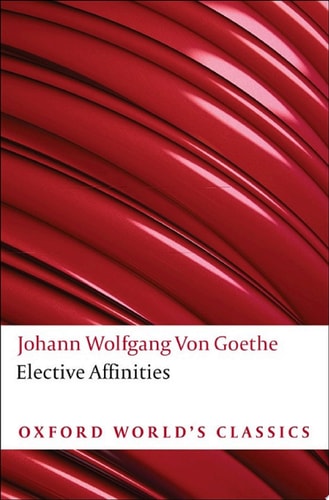
Elective Affinities
0
0
As an Amazon Associate and affiliate partner, Menrva Books earns from qualifying purchases. Learn more
Author Description
In Elective Affinities Goethe conducts an experiment with the lives of people who are living badly. Charlotte and Eduard, aristocracts with little to occupy them, invite Ottilie and the Captain into their lives; against morality, good sense, and conscious volition all four are drawn into relationships as inexorably as if they were substances in a chemical equation. The novel asks whether we have free will or not; more disturbingly, it confronts its characters with the monstrous consequences of their repression of any real life in themselves. Goethe wrote Elective Affinities when he was sixty and long established as Germany's literary giant. He remained an uneasy and scandalous figure, none the less, and readers of Elective Affinities were profoundly disturbed by its penetrating study of marriage and passion. ABOUT THE SERIES: For over 100 years Oxford World's Classics has made available the widest range of literature from around the globe. Each affordable volume reflects Oxford's commitment to scholarship, providing the most accurate text plus a wealth of other valuable features, including expert introductions by leading authorities, helpful notes to clarify the text, up-to-date bibliographies for further study, and much more.
Menrva's Summary
THE PULSE
The arrival of two guests into the quiet estate of a married couple triggers a series of social and romantic entanglements that mirror the unpredictable reactions of chemical elements. Charlotte and Eduard, a wealthy couple living in relative isolation, invite the Captain and Ottilie to reside on their estate, inadvertently destabilizing their own marriage. As the four individuals interact, their desires shift in ways that defy social convention and personal restraint. The narrative explores the tension between human agency and the deterministic forces of nature and passion. Written with a detached, analytical tone, the story examines the psychological disintegration of the characters as they succumb to their impulses.
INSIDE THE PAGES
- Use of chemical metaphors to explain human attraction and repulsion
- Exploration of the conflict between social duty and individual desire
- Examination of the institution of marriage in 19th-century society
- Third-person omniscient perspective providing clinical observation
- Symbolism involving architecture, gardening, and natural landscapes
- Focus on the consequences of repressed emotions and hidden motivations
- Philosophical inquiry into the existence of free will
- Tragic trajectory driven by the characters' inability to control their affinities
THE COLLECTIVE ECHO
Readers and critics frequently note the clinical, almost scientific precision with which the author dissects the emotional lives of his characters. Discussion often centers on the controversial nature of the plot, which challenged contemporary moral standards regarding marriage and fidelity. Many highlight the effectiveness of the chemical metaphor as a framework for understanding the inevitability of the characters' choices. The atmosphere is often described as restrained yet deeply unsettling, reflecting the internal turmoil of the protagonists. Scholars emphasize that the work remains a significant study of human psychology and the limitations of rational control over the heart.
Page Count:
273
Publication Date:
1999-01-01
Publisher:
OUP Oxford
ISBN-10:
0191605956
ISBN-13:
9780191605956
Romance
English & College Success
German
Philosophical
English
Social Commentary
classic
Community Tags
Similar Books