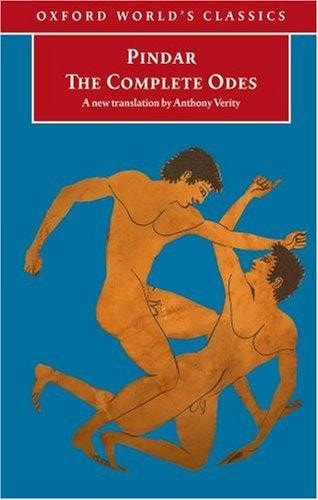
The Complete Odes
0
0
As an Amazon Associate and affiliate partner, Menrva Books earns from qualifying purchases. Learn more
Author Description
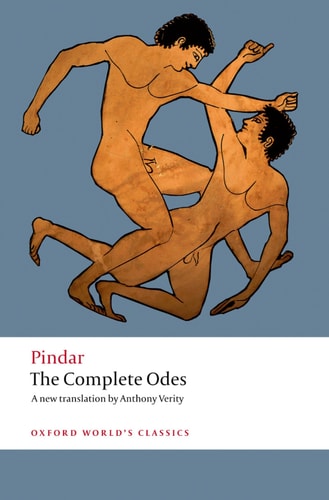
The Greek poet Pindar (c. 518-428 BC) composed victory odes for winners in the ancient Games, including the Olympics. He celebrated the victories of athletes competing in foot races, horse races, boxing, wrestling, all-in fighting and the pentathlon, and his Odes are fascinating not only for their poetic qualities, but for what they tell us about the Games. Pindar praises the victor by comparing him to mythical heroes and the gods, but also reminds the athlete of his human limitations. The Odes contain versions of some of the best known Greek myths, such as Jason and the Argonauts, and Perseus and Medusa, and are a valuable source for insights on Greek religion and ethics. Pindar's startling use of language, including striking metaphors, bold syntax, and enigmatic expressions, makes reading his poetry a uniquely rewarding experience.Anthony Verity's lucid translations stay as close as they can to the original Greek, without sacrificing readability. The text is complemented by a succinct introduction by Stephen Instone outlining the essential nature of Pindar's Odes as well as explaining the nature of the Games, the events, and the participants. Explanatory notes help the reader to navigate Pindar's sometimes compressed and allusive expressive technique.About the Series: For over 100 years Oxford World's Classics has made available the broadest spectrum of literature from around the globe. Each affordable volume reflects Oxford's commitment to scholarship, providing the most accurate text plus a wealth of other valuable features, including expert introductions by leading authorities, voluminous notes to clarify the text, up-to-date bibliographies for further study, and much more.
Menrva's Summary
THE PULSE
Pindar’s victory odes serve as a bridge between the mortal achievements of ancient athletes and the eternal realm of Greek mythology. These poems function as commissioned celebrations, where the poet elevates the victor’s physical prowess by weaving their success into the fabric of divine lineage and heroic legend. The narrative framework is rooted in the choral tradition, utilizing complex strophic structures to balance praise for the individual with cautionary reminders of human fragility. The work operates within the rigid social and religious constraints of the Panhellenic Games, where the poet acts as both chronicler and moral arbiter.
INSIDE THE PAGES
- Choral odes composed for victors of the ancient Olympic, Pythian, Nemean, and Isthmian Games.
- Integration of foundational Greek myths including the tales of Jason and the Argonauts.
- Use of dense, allusive syntax and striking metaphorical language.
- Philosophical reflections on the relationship between human achievement and divine favor.
- Exploration of aristocratic ethics and the concept of arete, or excellence.
- Structural reliance on the triad of strophe, antistrophe, and epode.
- Commentary on the cultural significance of athletic competition in the fifth century BC.
- Scholarly apparatus including explanatory notes to clarify compressed poetic imagery.
THE COLLECTIVE ECHO
Readers and critics frequently highlight the technical complexity of Pindar’s verse, noting that his work demands careful attention to both historical context and linguistic nuance. Discussion often centers on the poet's ability to transform specific athletic victories into universal meditations on mortality and glory. Scholars appreciate the balance between the celebratory tone of the odes and the underlying moral warnings that ground the poems in reality. The effectiveness of the translation is often praised for maintaining the rhythmic intensity of the original Greek while providing necessary clarity for modern readers. This collection is widely regarded as a primary resource for those interested in the intersection of ancient sport, religion, and literature.
Page Count:
186
Publication Date:
2008-10-15
Publisher:
Oxford University Press
ISBN-10:
0199553904
ISBN-13:
9780199553907
Classics
Poetry
Sports
English
Ancient History
English & College Success
English poetry
Mythology