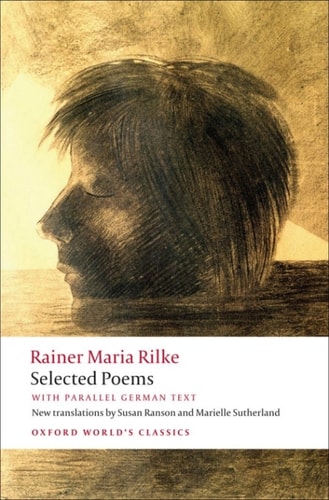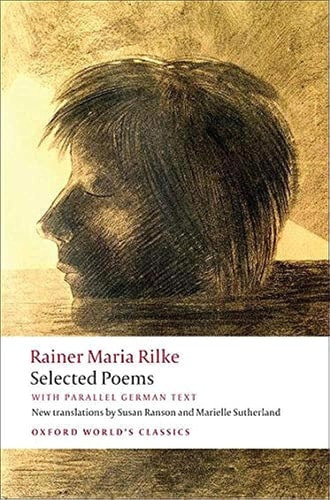
Selected Poems: With Parallel German Text
0
0
As an Amazon Associate and affiliate partner, Menrva Books earns from qualifying purchases. Learn more
Author Description
Rilke is one of the leading poets of European Modernism, and one of the great twentieth-century lyric poets in German. From The Book of Hours in 1905 to the Sonnets of Orpheus written in 1922, he constantly probed the relationship between his art and the world around him, moving from the neo-romantic and the mystic towards the precise craft of expressing the everyday in poetry. This new edition--the only bilingual edition to include such a broad range of poems--fully reflects Rilke's poetic development. It contains the full text of the Duino Elegies and the Sonnets to Orpheus, and selected poems from The Book of Images, New Poems, and earlier volumes, and from the uncollected poetry 1906-26. The translations are accurate, sensitive, and nuanced, and are accompanied by an introduction and notes that chart the development of Rilke's poetic practice and his central role in modern poetry. The book also includes a chronology, select bibliography, and explanatory notes that identify people and places, and include key commentary by Rilke from letters or notes.About the Series: For over 100 years Oxford World's Classics has made available the broadest spectrum of literature from around the globe. Each affordable volume reflects Oxford's commitment to scholarship, providing the most accurate text plus a wealth of other valuable features, including expert introductions by leading authorities, voluminous notes to clarify the text, up-to-date bibliographies for further study, and much more.
Menrva's Summary
THE PULSE
The central conflict involves the poet's struggle to bridge the gap between the internal, mystical experience and the external, objective reality of the modern world. Rilke’s objective is to refine his craft, moving from early neo-romantic tendencies toward a precise, existential engagement with the everyday. The poems operate within a framework of lyrical introspection, often utilizing the sonnet form and elegiac structures to explore themes of mortality, art, and perception. The reader encounters a progression of thought that spans decades, reflecting the poet's evolving philosophical stance on the nature of existence.
INSIDE THE PAGES
- Bilingual presentation featuring original German text alongside English translations
- Inclusion of the complete Duino Elegies and Sonnets to Orpheus
- Chronological arrangement tracking the poet's stylistic development
- Scholarly introduction detailing the poet's role in European Modernism
- Extensive explanatory notes identifying historical people and places
- Selection of uncollected poetry spanning 1906 to 1926
- Biographical chronology and select bibliography for further study
- Commentary derived from the poet's own letters and private notes
THE COLLECTIVE ECHO
Readers and critics frequently highlight the precision of the translations, noting how they maintain the rhythmic integrity of the original German. Discussion often centers on the transition from Rilke's early mystical phase to the more disciplined, object-oriented poetry of his later years. The inclusion of both the Duino Elegies and the Sonnets to Orpheus makes this volume a primary resource for those studying the evolution of twentieth-century lyricism. Scholars appreciate the scholarly apparatus, which provides necessary context for understanding the poet's complex relationship with his environment and artistic process.
Page Count:
416
Publication Date:
2011-05-08
Publisher:
Oxford University Press
ISBN-10:
019956941X
ISBN-13:
9780199569410
Poetry
Classics
Modernism
European
Community Tags
Similar Books