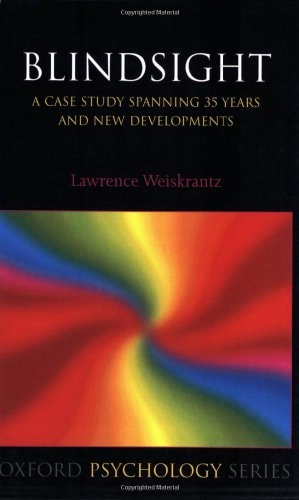
Blindsight: A Case Study Spanning 35 Years and New Developments
0
0
As an Amazon Associate and affiliate partner, Menrva Books earns from qualifying purchases. Learn more
Author Description
Blindsight is an unusual condition where the sufferer can respond to visual stimuli, while lacking any conscious feeling of having seen the stimuli. It occurs after a particular form of brain injury.The first edition of Blindsight, by one of the pioneers in the field - Lawrence Weiskrantz, reported studies of a patient with this condition. It was an important, much cited publication. In the past twenty years, further work has been done in this area, and this new edition brings the book up to date. Retaining the original text, but adding a substantial new chapter and colour illustrations, the first section of the book summarizes findings on DB since the last published account in 1986. The second part includes information on other new research that has occurred since the last edition. As well as giving an account of research over a number of years into a particular case of blindsight, it provides a discussion of the historical and neurological background, a review of cases reported by other investigators, and a number of theoretical and practical issues and implications.The book will be valuable for cognitive psychologists and cognitive neuroscientists, as well as philosophers of mind.
Menrva's Summary
THE THESIS
This book investigates the neurological phenomenon of blindsight, a condition where individuals respond to visual stimuli despite lacking conscious awareness of seeing them. Lawrence Weiskrantz, a pioneer in the field, utilizes longitudinal data from a specific patient case study alongside broader clinical research to examine the mechanisms of residual vision. The text provides a comprehensive framework for understanding how brain injury affects visual processing and the implications for consciousness and cognitive function.
THE SCOPE MAP
What You Will Find
- Longitudinal case study data spanning over three decades of clinical observation.
- Neurological and historical background regarding visual processing and brain injury.
- Comparative analysis of blindsight cases reported by multiple investigators.
- Theoretical discussions regarding the relationship between conscious perception and visual response.
THE AUTHORITY PERSPECTIVE
Experts recognize this work as a foundational text for understanding the dissociation between conscious awareness and sensory processing. Readers frequently note the academic density of the prose, which serves as a primary resource for cognitive neuroscientists and philosophers of mind.
Page Count:
272
Publication Date:
2009-05-24
Publisher:
Oxford University Press
ISBN-10:
0199567212
ISBN-13:
9780199567218
Psychology
Science
Neuroscience
Blind
Medical
Community Tags
Similar Books