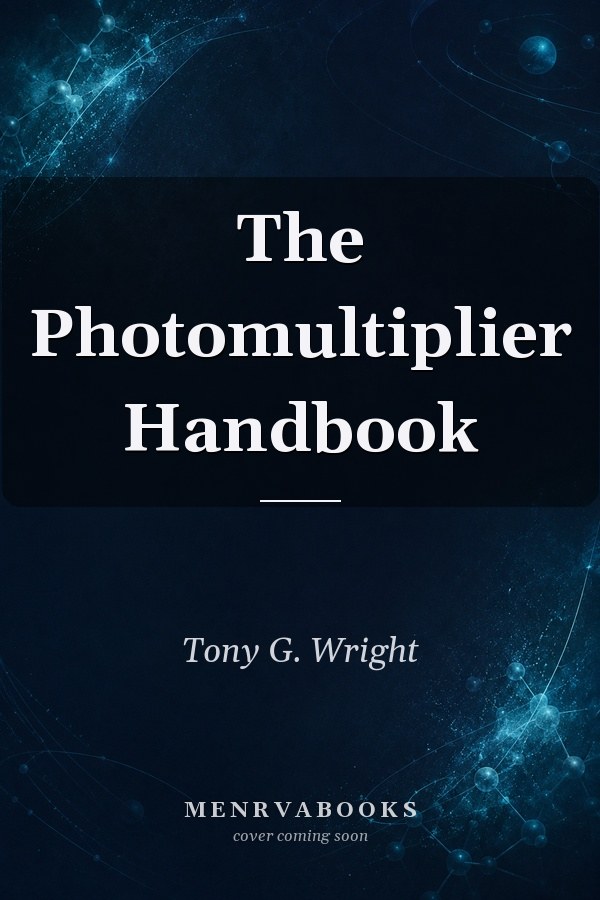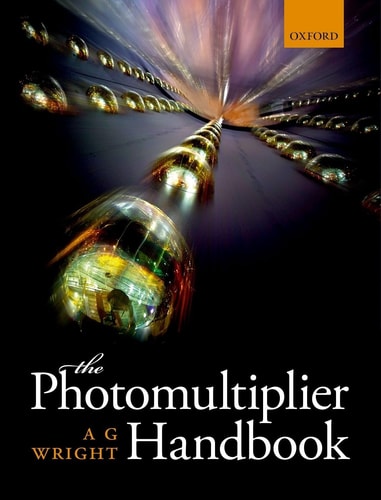
The Photomultiplier Handbook
0
0
As an Amazon Associate and affiliate partner, Menrva Books earns from qualifying purchases. Learn more
Author Description
Photomultipliers are extremely sensitive light detectors that can detect single photons. In multiplying the charge produced by incident light by up to 100 million times, these devices are essential to a wide range of functions, from medical instrumentation to astronomical observations. This complete and authoritative guide will provide students, practitioners, and researchers with a deeper understanding of the operating principles of these devices. Authored by an experienced user and manufacturer of photomultipliers, this handbook gives the reader insights into photomultiplier behaviour as a means to optimize performance.Diffuse and low level light sources are best served with a photomultiplier for the detection of single photon emissions. Light detection and electron multiplication are statistical in nature and the mathematics of these processes is derived from first principles. The book covers other related topics such as scintillation counting, light guides, and large area detectors. The usually complicated subject of biasing a photomultiplier, very important for optimal performance, is reduced to a comprehensible set of calculations. All applications demand some form of electronics, the options for which are fully explored in this book.
Menrva's Summary
THE THESIS
This handbook investigates the operational principles, statistical nature, and practical application of photomultiplier tubes in scientific and medical instrumentation. Authored by A. G. Wright, a professional with extensive experience in both the manufacturing and application of these devices, the text provides a rigorous framework for understanding electron multiplication. It bridges the gap between theoretical physics and practical implementation, offering readers the mathematical foundation necessary to optimize performance in low-light detection scenarios.
THE SCOPE MAP
What You Will Find
- Mathematical derivations of light detection and electron multiplication processes from first principles.
- Practical methodologies for biasing photomultipliers to achieve optimal performance.
- Technical analysis of related systems including scintillation counting, light guides, and large area detectors.
- Comprehensive exploration of electronic options required for various application demands.
THE AUTHORITY PERSPECTIVE
Experts and practitioners recognize this work as a foundational technical resource for those working with high-sensitivity light detection. Readers frequently note the clarity with which the author reduces complex biasing calculations into manageable, actionable procedures for laboratory and industrial use.
Page Count:
624
Publication Date:
2017-08-22
Publisher:
Oxford University Press
ISBN-10:
0199565090
ISBN-13:
9780199565092
Science
Engineering
Technology
Physics
Optics
Community Tags
Similar Books