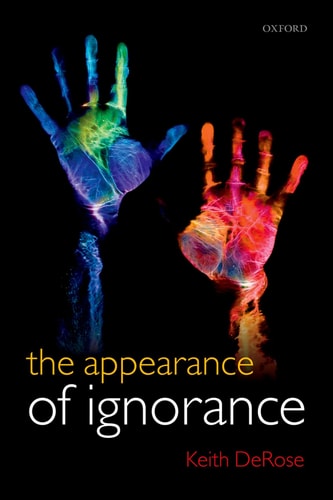
The Appearance of Ignorance: Knowledge, Skepticism, and Context, Volume 2
0
0
As an Amazon Associate and affiliate partner, Menrva Books earns from qualifying purchases. Learn more
Author Description
Contextualism, the view that the epistemic standards a subject must meet in order for a claim attributing "knowledge" to her to be true do vary with context, has been hotly debated in epistemology and philosophy of language during the last few decades. This volume presents, develops, and defends contextualist solutions to two of the stickiest problems in epistemology: the puzzles of skeptical hypotheses and of lotteries. It is argued that, at least by ordinary standards for knowledge, we do know that skeptical hypotheses are false, and that we've lost the lottery. Why it seems that we don't know that they're false tells us a lot, both about what knowledge is and how knowledge attributions work.The Appearance of Ignorance is the companion volume to Keith DeRose's 2009 title The Case for Contextualism: Knowledge, Skepticism, and Context, Volume 1.
Menrva's Summary
THE THESIS
How do shifting epistemic standards in different contexts resolve long-standing philosophical problems regarding skepticism and knowledge? Keith DeRose, a prominent philosopher, utilizes the framework of contextualism to argue that the truth conditions for knowledge attributions fluctuate based on the conversational context. By applying this linguistic and epistemic lens, he addresses the persistent challenges posed by skeptical hypotheses and lottery paradoxes, providing a structured defense for common-sense knowledge claims.
THE SCOPE MAP
What You Will Find
- Analysis of the lottery paradox and its implications for knowledge claims
- Development of contextualist solutions to skeptical hypotheses
- Examination of the relationship between ordinary knowledge standards and philosophical skepticism
- Theoretical framework for how knowledge attributions function in language
THE AUTHORITY PERSPECTIVE
Experts in epistemology recognize this work as a significant contribution to the ongoing debate surrounding contextualism. Readers frequently note the academic density of the prose, which is intended for those with a background in analytic philosophy.
Page Count:
336
Publication Date:
2018-03-18
Publisher:
Oxford University Press
ISBN-10:
0199564477
ISBN-13:
9780199564477
Non-Fiction
Philosophy
Knowledge Theory
Skepticism
Language
Epistemology
Community Tags
Similar Books