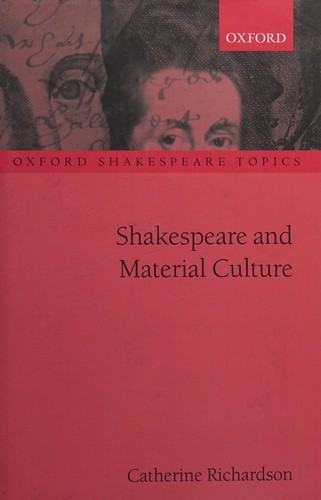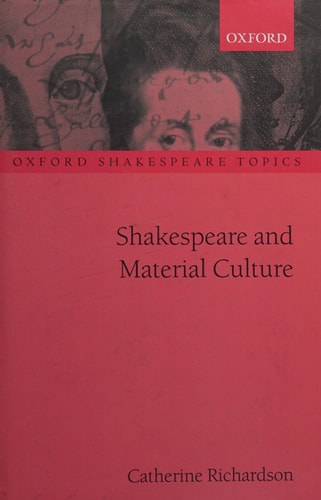
Shakespeare and Material Culture
0
0
As an Amazon Associate and affiliate partner, Menrva Books earns from qualifying purchases. Learn more
Author Description
What is the significance of Shylock's ring in The Merchant of Venice? How does Shakespeare create Gertrude's closet in Hamlet? How and why does Ariel prepare a banquet in The Tempest? In order to answer these and other questions, Shakespeare and Material Culture explores performance from the perspective of the material conditions of staging. In a period just starting to be touched by the allure of consumer culture, in which objects were central to the way gender and social status were experienced but also the subject of a palpable moral outrage, this book argues that material culture has a particularly complex and resonant role to play in Shakespeare's employment of his audience's imagination.Chapters address how props and costumes work within the drama's dense webs of language - how objects are invested with importance and how their worth is constructed through the narratives which surround them. They analyse how Shakespeare constructs rooms on the stage from the interrelation of props, the description of interior spaces and the dynamics between characters, and investigate the different kinds of early modern practices which could be staged - how the materiality of celebration, for instance, brings into play notions of hospitality and reciprocity. Shakespeare and Material Culture ends with a discussion of the way characters create unique languages by talking about things - languages of faerie, of madness, or of comedy - bringing into play objects and spaces which cannot be staged. Exploring things both seen and unseen, this book shows how the sheer variety of material cultures which Shakespeare brings onto the stage can shed fresh light on the relationship between the dynamics of drama and its reception and comprehension.
Menrva's Summary
THE THESIS
This book investigates how the material world of early modern England—specifically objects, props, and interior spaces—functions as a critical component in the construction of meaning within Shakespearean drama. Catherine Richardson, a scholar of early modern literature and material culture, utilizes a framework that bridges the gap between physical stagecraft and the audience's imaginative reception. By analyzing the intersection of consumer culture, social status, and moral discourse, the author argues that objects are not merely decorative but are central to the linguistic and thematic architecture of the plays. The text provides a systematic examination of how Shakespeare invests physical items with narrative weight to define character, gender, and social dynamics.
THE SCOPE MAP
What You Will Find
- Analysis of the role of props and costumes in shaping dramatic language and character identity.
- Examination of how interior spaces are constructed on stage through the interaction of objects and dialogue.
- Investigation of early modern cultural practices such as hospitality, celebration, and social reciprocity.
- Discussion of how characters utilize descriptions of unseen objects to create specialized languages of madness, comedy, and the supernatural.
THE AUTHORITY PERSPECTIVE
Scholars and students of Shakespearean studies frequently cite this work as a vital resource for understanding the intersection of performance history and material culture. The text is noted for its accessible yet rigorous approach to the physical realities of the early modern stage.
Page Count:
208
Publication Date:
2011-11-01
Publisher:
Oxford University Press
ISBN-10:
019956227X
ISBN-13:
9780199562275
History
Drama
Literary Criticism
Shakespeare