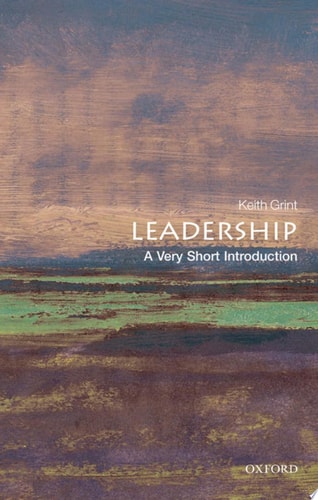
Leadership: A Very Short Introduction
0
0
As an Amazon Associate and affiliate partner, Menrva Books earns from qualifying purchases. Learn more
Author Description
Napoleon. Bill Gates. George W. Bush. Osama bin Laden. Leaders and leadership are perennial topics of debate. What is leadership? How does one become a leader? Do we actually need leaders? In this Very Short Introduction, Keith Grint offers provocative answers to these questions, prompting readers to rethink their assumptions about what leadership is. Indeed, Grint argues that leadership is a very elusive quality, and that there are few definitive answers to be found, which explains why most books on leadership produce so much heat and so little light. But there are important questions to ask, questions which shed light on why leadership so resists definition. Grint looks at the way leadership has evolved from its earliest manifestations in ancient societies, highlights the early ideas about leadership found in Plato, Sun Tzu, Machiavelli and others, considers how social, economic, and political forces can undermine particular modes of leadership, and discusses the practice of management, its history, future, and influence on all aspects of society.
Menrva's Summary
THE THESIS
This book investigates the fundamental nature of leadership, questioning why the concept remains so resistant to a singular, definitive academic or practical definition. Professor Keith Grint, an expert in public leadership and management, utilizes historical analysis and political theory to challenge common assumptions about what constitutes a leader. He argues that the elusive nature of leadership is precisely why most literature on the subject fails to provide clarity, and he proposes a framework that examines leadership through the lens of evolving social, economic, and political pressures.
THE SCOPE MAP
What You Will Find
- Historical evolution of leadership from ancient societies to the modern era
- Comparative analysis of classical thinkers including Plato, Sun Tzu, and Machiavelli
- Examination of the distinction between leadership and management practices
- Critical assessment of how external forces undermine or enable specific leadership modes
THE AUTHORITY PERSPECTIVE
Experts and readers frequently note the academic density of the prose, which avoids simplistic self-help tropes in favor of rigorous intellectual inquiry. This text is widely regarded as a foundational primer for those seeking to understand the complexities of leadership theory rather than a manual for practical application.
Page Count:
142
Publication Date:
2010-01-01
Publisher:
Oxford University Press
ISBN-10:
0199569916
ISBN-13:
9780199569915
History
Leadership
Sociology
Management
Community Tags
Other Editions(3)
Similar Books