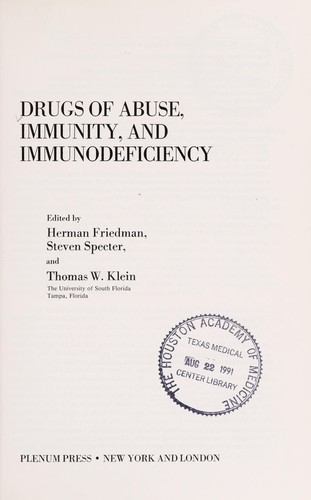
Drugs of Abuse, Immunity, and Immunodeficiency
0
0
As an Amazon Associate and affiliate partner, Menrva Books earns from qualifying purchases. Learn more
Author Description
This volume focuses on the relationship between the nervous and the immune system with regard to the effects of drugs of abuse and infections, including infection caused by the immunodeficiency virus which causes AIDS, the number one health problem worldwide. Chapters focus on the brain-immune axis, detailing the effects of drugs of abuse. It is well known that recreational drugs of abuse such as morphine, cocaine, and marijuana, as well as other drugs, including the legal drugs alcohol and nicotine, are used by large numbers of individuals. Serious concerns have been raised about the consequences of using such drugs, especially in relation to their effects on normal physiological responses, including immune mechanisms. It is now widely recognized not only that many drugs of abuse have serious consequences on normal parameters of neurologic and neuroendocrine systems in general but also that effects on those systems, in turn, may affect indirectly immunity and also directly affect immune systems. Much data has now been accumulated showing that drugs of abuse markedly alter the immune response in human populations as well as in experimental animals, both in vivo and in vitro. Furthermore, studies on microbial infections have shown that many drugs of abuse are associated with increased susceptibility to infectious diseases, especially opportunistic intracellular microorganisms, including viruses such as HIV which causes AIDS. The mechanisms whereby drugs of abuse increase the likelihood of infections by opportunistic microorganisms in humans as well as in experimental animals are delineated. This volume will further the understanding of the impact of drugs of abuse on the brain-immune axis and its relationship to immunomodulation and infection, especially that caused by the AIDS virus.
Menrva's Summary
THE THESIS
This volume investigates the complex interplay between drug abuse, the immune system, and the development of immunodeficiency, particularly in the context of HIV/AIDS. The book examines the brain-immune axis, detailing how recreational and legal drugs like morphine, cocaine, marijuana, alcohol, and nicotine impact neurological and neuroendocrine systems, which in turn affect immunity. It synthesizes data demonstrating that these drugs significantly alter immune responses in both humans and animals, increasing susceptibility to opportunistic infections, especially viruses like HIV. The work aims to deepen the understanding of how drug abuse influences immunomodulation and infection, with a specific focus on AIDS.
THE SCOPE MAP
- Detailed exploration of the brain-immune axis and its modulation by drugs of abuse.
- Analysis of the effects of specific drugs including morphine, cocaine, marijuana, alcohol, and nicotine.
- Examination of how drug-induced alterations in neurological and neuroendocrine systems impact immune function.
- Data on the increased susceptibility to opportunistic infections, particularly viral infections like HIV.
- In vivo and in vitro studies demonstrating the effects of drugs of abuse on immune responses.
- Discussion of the mechanisms by which drugs of abuse increase the likelihood of infections.
THE AUTHORITY PERSPECTIVE
This volume is a specialized scientific compilation that delves into the intricate connections between drug abuse and immune system function, with a particular emphasis on immunodeficiency and AIDS. The collection of chapters, authored by various experts, aims to provide a comprehensive overview of current research in this critical area. It synthesizes findings from both human studies and animal models to elucidate the mechanisms by which drugs of abuse compromise immune defenses. The book serves as a valuable resource for researchers and clinicians seeking to understand the multifaceted impact of substance abuse on health, especially concerning infectious diseases.
Page Count:
317
Publication Date:
1991-01-01
ISBN-10:
0306438909
Non-Fiction
Action
Science
Pharmacology
Neuroscience
Public Health
Immunology
Community Tags
Similar Books