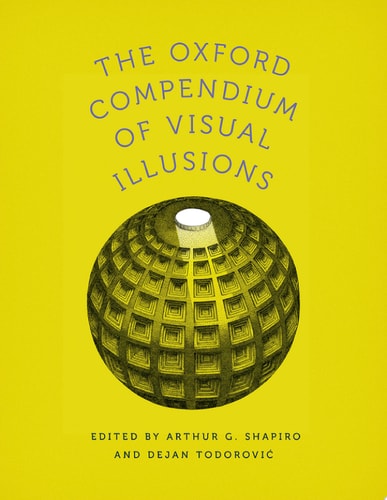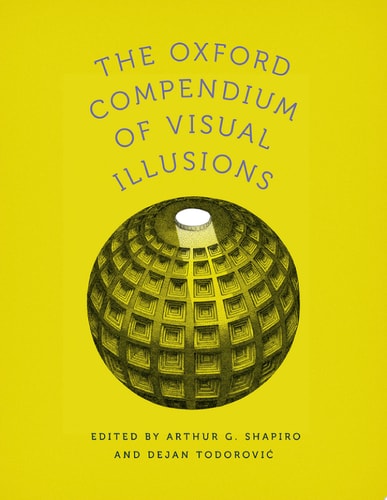
The Oxford Compendium of Visual Illusions
0
0
As an Amazon Associate and affiliate partner, Menrva Books earns from qualifying purchases. Learn more
Author Description
Visual illusions cut across academic divides and popular interests: on the one hand, illusions provide entertainment as curious tricks of the eye; on the other hand, scientific research related to illusory phenomena has given generations of scientists and artists deep insights into the brain and principles of mind and consciousness. Numerous thinkers (including Aristotle, Descartes, Da Vinci, Escher, Goethe, Galileo, Helmholtz, Maxwell, Newton, and Wittgenstein) have been lured by the apparent simplicity of illusions and the promise that illusory phenomena can elucidate the puzzling relationship between the physical world and our perceptual reality. Over the past thirty years, advances in imaging and electrophysiology has dramatically expanded the range of illusions and enabled new forms of analysis, thereby creating new and exciting ways to consider how the brain constructs our perceptual world.The Oxford Compendium of Visual Illusions is a collection of over one hundred chapters about illusions, displayed and discussed by the researchers who invented and conducted research on the illusions. Chapters include full-color images, associated videos, and extensive references. The book is divided into eleven sections: first, a presentation of general history and viewpoints on illusions, followed by sections on geometric, color, motion, space, faces, and cross-category illusions. The book will be of interest to vision scientists, neuroscientists, psychologists, physicists, philosophers, artists, designers, advertisers, and educators curious about applied aspects of visual perception and the brain.
Menrva's Summary
THE THESIS
This compendium investigates the fundamental question of how visual illusions reveal the complex mechanisms by which the human brain constructs perceptual reality from physical stimuli. Editors Arthur G. Shapiro and Dejan Todorovic curate contributions from a wide array of researchers to examine how illusory phenomena bridge the gap between the physical world and internal consciousness. By synthesizing historical perspectives with modern electrophysiological and imaging data, the text provides a comprehensive framework for understanding the relationship between sensory input and cognitive interpretation.
THE SCOPE MAP
What You Will Find
- Over one hundred chapters detailing specific visual illusions and their underlying mechanisms.
- Eleven thematic sections covering geometric, color, motion, space, face, and cross-category illusions.
- Integrated multimedia resources including full-color images and associated video demonstrations.
Scope Limits
- The text focuses primarily on visual perception and does not provide an exhaustive analysis of auditory or tactile illusions.
- While it touches on philosophical implications, it remains grounded in empirical vision science rather than pure metaphysical theory.
THE AUTHORITY PERSPECTIVE
Experts and researchers in the fields of neuroscience and psychology recognize this volume as a comprehensive reference for both historical and contemporary studies of visual perception. Readers frequently note the academic density of the prose, which is balanced by the inclusion of practical demonstrations and visual aids that make the material accessible to both specialists and curious practitioners.
Page Count:
831
Publication Date:
2016-01-01
Publisher:
Oxford University Press
ISBN-10:
0190631686
ISBN-13:
9780190631680
Psychology
Science
Allied Health
Medical
Perception
Neuroscience
Reference
Visual Arts