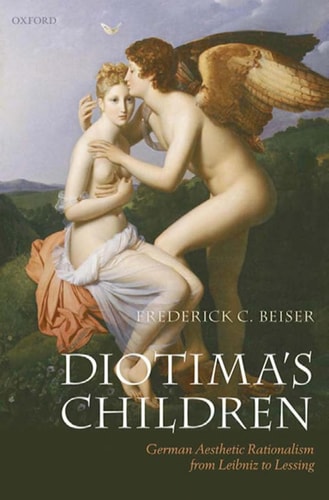
Diotima's Children: German Aesthetic Rationalism from Leibniz to Lessing
0
0
As an Amazon Associate and affiliate partner, Menrva Books earns from qualifying purchases. Learn more
Author Description
Diotima's Children is a re-examination of the rationalist tradition of aesthetics which prevailed in Germany in the late seventeenth and eighteenth century. It is partly an historical survey of the central figures and themes of this tradition But it is also a philosophical defense of some of its leading ideas, viz., that beauty plays an integral role in life, that aesthetic pleasure is the perception of perfection, that aesthetic rules are inevitable and valuable. It shows that the criticisms of Kant and Nietzsche of this tradition are largely unfounded. The rationalist tradition deserves re-examination because it is of great historical significance, marking the beginning of modern aesthetics, art criticism, and art history.
Menrva's Summary
THE THESIS
This work investigates the validity and historical significance of the German aesthetic rationalist tradition, challenging the long-standing critiques leveled by Kant and Nietzsche. Professor Frederick C. Beiser, a prominent scholar of German philosophy, utilizes a rigorous historical and analytical framework to reconstruct the arguments of thinkers from Leibniz to Lessing. He argues that the rationalist view—which posits beauty as the perception of perfection and asserts the necessity of aesthetic rules—remains a vital and defensible component of modern philosophical discourse.
THE SCOPE MAP
What You Will Find
- A comprehensive historical survey of German aesthetic thought from the late seventeenth to the eighteenth century.
- Philosophical analysis of the core tenets of rationalist aesthetics, including the role of beauty in human life.
- A critical defense of rationalist principles against the historical dismissals of major post-Kantian thinkers.
- An examination of the foundational influence this tradition exerted on the development of modern art history and criticism.
THE AUTHORITY PERSPECTIVE
Scholars and students of philosophy frequently cite this text as a necessary corrective to the standard historical narrative that favors Kantian aesthetics. Experts highlight the clarity of Beiser's prose, noting that he successfully bridges the gap between dense historical documentation and contemporary philosophical argumentation.
Page Count:
306
Publication Date:
2009-01-11
Publisher:
Oxford University Press
ISBN-10:
0199573018
ISBN-13:
9780199573011
Philosophy
History
Aesthetics
German Philosophy
Rationalism
Community Tags
Similar Books