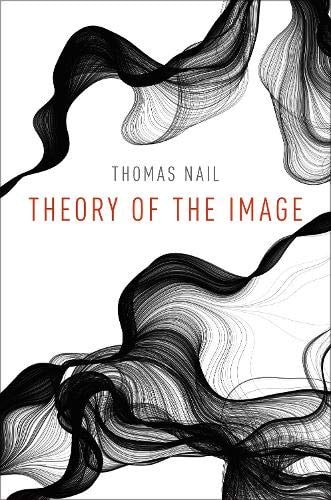
Theory of the Image
0
0
As an Amazon Associate and affiliate partner, Menrva Books earns from qualifying purchases. Learn more
Author Description
We live in an age of the mobile image. The world today is absolutely saturated with images of all kinds circulating around the world at an incredible rate. The movement of the image has never been more extraordinary than it is today. This recent kinetic revolution of the image has enormous consequences not only for the way we think about contemporary art and aesthetics but also for art history as well.Responding to this historical moment, Theory of the Image offers a fresh new theory and history of art from the perspective of this epoch-defining mobility. The image has been understood in many ways, but it is rarely understood to be fundamentally in motion. The original and materialist approach is what defines Theory of the Image and what allows it to offer the first kinetic history of the Western art tradition. In this book, Thomas Nail further develops his larger philosophy of movement into a comprehensive "kinesthetic" of the moving image from prehistory to the present. The book concludes with a vivid analysis of the contemporary digital image and its hybridity, ultimately outlining new territory for research and exploration across aesthetics, art history, cultural theory, and media studies.
Menrva's Summary
THE THESIS
How does the fundamental mobility of the image redefine the history of Western art and contemporary aesthetics? Thomas Nail, a philosopher known for his work on the ontology of movement, applies his kinesthetic framework to the history of visual representation. He argues that images are not static objects but are defined by their circulation, proposing a materialist history that traces the evolution of the image from prehistoric artifacts to contemporary digital media.
THE SCOPE MAP
What You Will Find
- A kinesthetic history of Western art spanning from prehistory to the present day.
- A theoretical framework for understanding the image as a mobile, material entity.
- Analysis of the transition from physical to digital image circulation.
- Exploration of hybridity in contemporary visual culture.
Scope Limits
- The text focuses primarily on the Western art tradition rather than a global survey of visual culture.
- It does not provide a technical manual for digital image production or software development.
THE AUTHORITY PERSPECTIVE
Scholars and critics recognize this work as a significant contribution to the philosophy of movement and media theory. Readers frequently note the academic density of the prose, which requires familiarity with contemporary continental philosophy to fully grasp the author's conceptual arguments.
Page Count:
432
Publication Date:
2019-06-12
Publisher:
Oxford University Press
ISBN-10:
019005008X
ISBN-13:
9780190050085
History
Politics
Non-Fiction
Philosophy
New Used & Rental Textbooks
Aesthetics
Art Criticism
Criticism history
Criticism
Media Studies
Art History
Cultural Theory
Video photography
Humanities
Community Tags
Similar Books