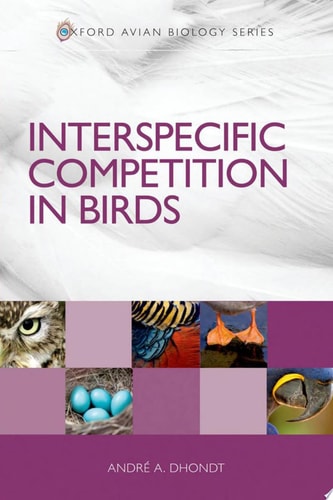
Interspecific Competition in Birds
0
0
As an Amazon Associate and affiliate partner, Menrva Books earns from qualifying purchases. Learn more
Author Description
In nature there exist three main types of biotic interactions between individuals of different species: competition, predation, and mutualism. All three exert powerful selection pressures, and all three shape communities. However, the question of how important interspecific competition in nature really is remains controversial and unresolved. This book provides a critical and exhaustive review of the topic. Although the examples are limited mostly to birds (interspecific competition and community structure have been exhaustively studied in this animal group, and a lot of experimental data are available), the conclusions reached have a far broader relevance to population ecologists in general. The book reasons that the coexistence of species is the result of both past and presently on-going interspecific competition. Furthermore, understanding the importance of interspecific competition in natural systems will be increasingly important when modelling the effects of climate change on populations.
Menrva's Summary
THE THESIS
This book investigates the extent to which interspecific competition functions as a primary driver of species coexistence and community structure in natural environments. Andre A. Dhondt, a specialist in avian ecology, synthesizes decades of experimental data to evaluate the controversial role of competition compared to predation and mutualism. By focusing on avian models, the author constructs a framework that links historical evolutionary pressures with contemporary population dynamics. The text argues that recognizing these competitive interactions is vital for accurate ecological modeling, particularly regarding the impacts of climate change on biodiversity.
THE SCOPE MAP
What You Will Find
- A comprehensive review of biotic interactions including competition, predation, and mutualism.
- Analysis of experimental data specifically derived from avian community studies.
- Theoretical frameworks for understanding species coexistence and niche partitioning.
- Discussion on the application of competitive models to predict population responses to environmental shifts.
THE AUTHORITY PERSPECTIVE
Experts recognize this work as a rigorous synthesis of avian ecology that bridges the gap between specific field studies and broader ecological theory. Readers frequently note the academic density of the prose, making it a valuable resource for graduate students and professional ecologists interested in population dynamics.
Page Count:
296
Publication Date:
2012-01-13
Publisher:
Oxford University Press
ISBN-10:
0199589011
ISBN-13:
9780199589012
Science
Birds
Zoology
Ornithology
Biology
Competition
Ecology
Community Tags
Similar Books