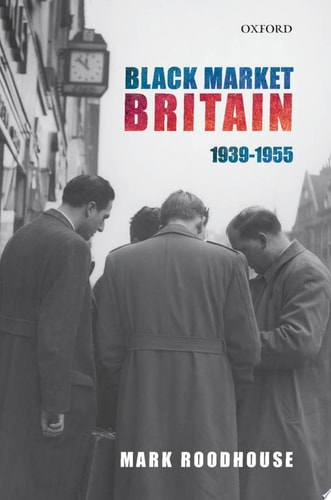
Black Market Britain: 1939-1955
0
0
As an Amazon Associate and affiliate partner, Menrva Books earns from qualifying purchases. Learn more
Author Description
Thanks to rationing and price control, Britain's underground economy flourished during the 1940s and early 1950s as producers, traders, and professional criminals helped consumers to get a little extra "on the side," "from under the counter," or "off the back of a lorry." Yet widespread evasion of regulations designed to ensure "fair shares for all" did not undermine the austerity policies that characterised these years.In Black Market Britain, Mark Roodhouse argues that Britons showed self-restraint in their illegal dealings. The means, motives, and opportunities for evasion were not lacking. The shortages were real, regulations were not watertight, and enforcement was haphazard. Fairness, not patriotism and respect for the law, is the key to understanding this self-restraint. By invoking popular notions of a fair price, a fair profit, and a fair share, government rhetoric limited black marketeering as would-be evaders had to justify their offences both to themselves and others.Black Market Britain underlines the importance of fairness to those seeking a richer understanding of economic life in modern Britain.
Menrva's Summary
THE THESIS
This book investigates how the concept of fairness acted as a self-regulating mechanism that prevented the widespread collapse of British austerity policies during the black market boom of 1939-1955. Mark Roodhouse, a historian specializing in modern British social and economic history, utilizes archival records, government reports, and contemporary accounts to challenge the assumption that illegal economic activity was driven solely by greed or a lack of patriotism. He argues that the government's own rhetoric regarding 'fair shares' created a moral framework that constrained the scale of illicit trade, forcing participants to justify their actions through a shared cultural understanding of economic equity.
THE SCOPE MAP
What You Will Find
- An analysis of the British underground economy during the rationing era of the 1940s and early 1950s.
- A study of the interplay between government regulation, enforcement gaps, and public compliance.
- Examination of primary source materials including legal records, policy documents, and popular media of the time.
- A framework for understanding how social norms and moral justifications influence economic behavior in times of scarcity.
THE AUTHORITY PERSPECTIVE
Historians and economic scholars recognize this work as a significant contribution to the study of post-war British social policy. Readers frequently note the academic density of the prose, which provides a rigorous examination of how moral values shaped the economic reality of the era.
Page Count:
288
Publication Date:
2013-05-19
Publisher:
Oxford University Press
ISBN-10:
0199588457
ISBN-13:
9780199588459
History
Social History
British History
20th Century
Black Market
Economic History
Community Tags
Similar Books