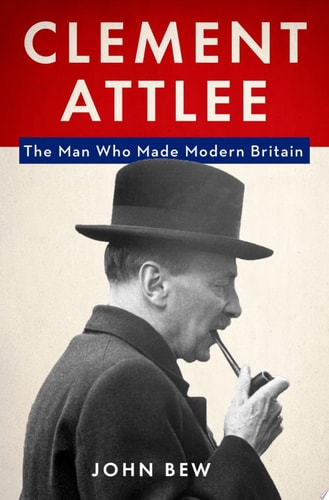
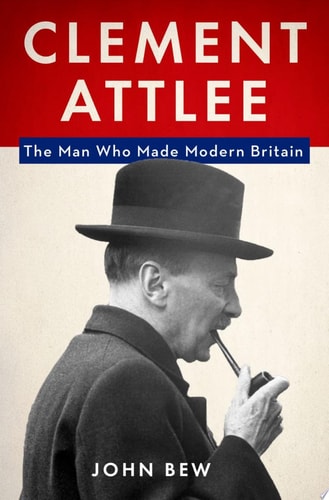
Clement Attlee: The Man Who Made Modern Britain
0
0
As an Amazon Associate and affiliate partner, Menrva Books earns from qualifying purchases. Learn more
Author Description
Throughout the first half of the twentieth century, Winston Churchill's wartime heroics and larger-than-life personality propelled him to the center of the world stage. To most, he remains Great Britain's greatest Prime Minister, his fame and charisma overshadowing those who followed in his footsteps. Yet while he presided over his country's finest hour, he was not its most consequential leader. In this definitive new biography, John Bew reveals how that designation belongs to Clement Attlee, Churchill's successor, who launched a new era of political, economic, and social reform that would forever change Great Britain.Bew's thorough and keen examination of Attlee, the former leader of the Labour Party, illuminates how his progressive beliefs shaped his influential domestic and international policy. Alternatively criticized for being "too socialist" or "not radical enough," Attlee's quiet tenacity was intrinsic to the success of his party and highly pertinent to British identity overall. In 1948, he established the National Health Service as part of his "British New Deal"-a comprehensive, universal system of insurance, welfare, and family allowances to be enjoyed by all British citizens. Attlee also initiated key advancements in international relations by supporting the development of both the United Nations and the North Atlantic Treaty Organization, and by granting independence to India, Burma, and Ceylon. More controversially, he sanctioned the building of Britain's nuclear deterrent in response to the rise of the Soviet Union and the threat of atomic bombs. Clement Attlee: The Man Who Made Modern Britain explores his tenure in the years after the war, as he presided over a radical new government in an age of austerity and imperial decline. Bew mines contemporary memoirs, diaries, and press excerpts to present readers with an illuminating and intimate look into Attlee's life and career. Attentive to both the man and the political landscape, this comprehensive biography provides a fresh perspective on the leader who built the foundations of the modern United Kingdom.
Menrva's Summary
THE THESIS
This biography investigates how Clement Attlee, rather than his predecessor Winston Churchill, served as the primary architect of modern British society through his post-war reforms. John Bew, a professor of history and foreign policy, utilizes a vast array of primary source materials to argue that Attlee’s quiet, pragmatic leadership was the catalyst for the creation of the welfare state and the restructuring of Britain’s international role. The text examines the tension between Attlee’s socialist ideals and the practical constraints of a nation facing post-war austerity and imperial decline.
THE SCOPE MAP
What You Will Find
- Detailed analysis of the formation of the National Health Service and the British welfare state.
- Examination of post-war foreign policy, including the establishment of the UN and NATO.
- Historical context regarding the decolonization of India, Burma, and Ceylon.
- Strategic overview of the development of Britain’s nuclear deterrent.
Scope Limits
- The text focuses primarily on Attlee’s political career and tenure as Prime Minister rather than his early childhood or personal life outside of politics.
- It does not provide an exhaustive military history of the Second World War, focusing instead on the transition to the post-war era.
THE AUTHORITY PERSPECTIVE
Historians and political analysts frequently cite this work as a comprehensive and balanced account of a previously overshadowed political figure. Experts highlight the author's meticulous use of archival materials to provide a nuanced view of Attlee’s administrative legacy.
Page Count:
688
Publication Date:
2017-01-01
Publisher:
Oxford University Press
ISBN-10:
0190203420
ISBN-13:
9780190203429
Biography
History
Great Britain
European History
English & College Success
English
British History
Political Biography
20th Century
Biography Autobiography
Community Tags
Other Editions(2)

Similar Books

Reader Comments
Share Your Thoughts
No comments yet. Be the first to share your thoughts!