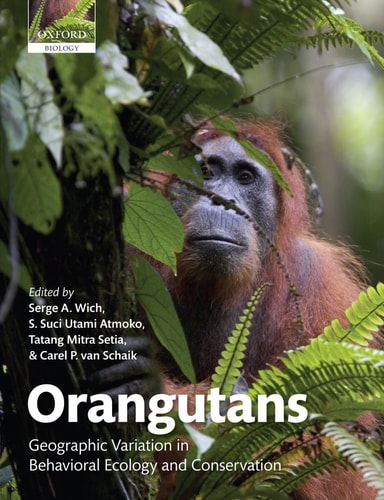
Orangutans: Geographic Variation in Behavioral Ecology and Conservation
0
0
As an Amazon Associate and affiliate partner, Menrva Books earns from qualifying purchases. Learn more
Author Description
This book describes one of our closest relatives, the orangutan, and the only extant great ape in Asia. It is increasingly clear that orangutan populations show extensive variation in behavioural ecology, morphology, life history, and genes. Indeed, on the strength of the latest genetic and morphological evidence, it has been proposed that orangutans actually constitute two species which diverged more than a million years ago - one on the island of Sumatra the other on Borneo, with the latter comprising three subspecies.This book has two main aims. The first is to carefully compare data from every orangutan research site, examining the differences and similarities between orangutan species, subspecies, and populations. The second is to develop a theoretical framework in which these differences and similarities can be explained. To achieve these goals the editors have assembled the world's leading orangutan experts to rigorously synthesize and compare the data, quantify the similarities or differences, and seek to explain them.Orangutans is the first synthesis of orangutan biology to adopt this novel, comparative approach. It analyses and compares the latest data, developing a theoretical framework to explain morphological, life history, and behavioural variation. Intriguingly, not all behavioural differences can be attributed to ecological variation between and within the two islands; relative rates of social learning also appear to have been influential. The book also emphasizes the crucial impact of human settlement on orangutans and looks ahead to the future prospects for the survival of critically endangered natural populations.
Menrva's Summary
THE THESIS
This volume investigates the drivers of geographic, morphological, and behavioral variation among orangutan populations across Sumatra and Borneo. The editors, all prominent primatologists, synthesize multi-site research data to establish a theoretical framework that accounts for the observed differences in life history and social learning. By integrating genetic evidence with field observations, the authors argue that ecological factors alone cannot explain the full spectrum of variation found within these great ape populations.
THE SCOPE MAP
What You Will Find
- Comparative analysis of orangutan populations across all major research sites in Sumatra and Borneo.
- Theoretical models explaining the divergence of species and subspecies based on genetic and morphological data.
- Examination of the role of social learning versus ecological adaptation in shaping behavioral traits.
- Assessment of human impact on habitat and the long-term survival prospects for critically endangered populations.
THE AUTHORITY PERSPECTIVE
Experts recognize this work as a foundational synthesis for primatologists and conservation biologists studying great ape diversity. Readers frequently note the technical density of the data, which serves as a primary reference for understanding the evolutionary history and current ecological status of Asian great apes.
Page Count:
440
Publication Date:
2010-02-28
Publisher:
Oxford University Press
ISBN-10:
019958415X
ISBN-13:
9780199584154
Science
Orangutans
Primatology
Conservation
Ecology
Zoology
Biology
Community Tags
Similar Books