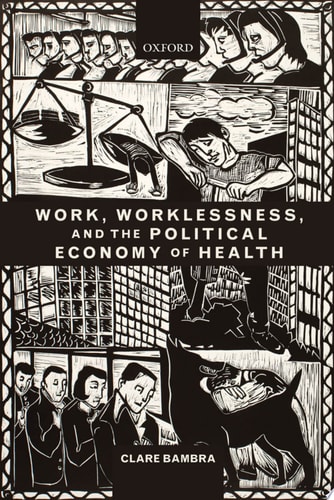
Work, Worklessness, and the Political Economy of Health
0
0
As an Amazon Associate and affiliate partner, Menrva Books earns from qualifying purchases. Learn more
Author Description
We are told that 'work is good for us' and that ill health is caused by 'individual lifestyles'. Drawing on research from public health, social policy, epidemiology, geography and political science, this evidence-based inter-disciplinary book firmly challenges these contemporary orthodoxies. It systematically demonstrates that work - or lack of it - is central to our health and wellbeing and is the underlying determinant of health inequalities.Work is the cornerstone of modern society and dominates adult life with around a third of our time spent working. It is a vital part of self-identity and for most of us it is the foundation of economic and social status. As such, the material and psychosocial conditions in which we work have immense consequences for our physical and mental wellbeing, as well as the distribution of health across the population. Recessions, job-loss, insecurity and unemployment also have important ramifications for the health and wellbeing of individuals, families and communities. Chronic illness is itself a significant cause of worklessness and low pay.Drawing on examples from different countries, this book shows that the relationship between work, worklessness and health varies by country. Countries with a more regulated work environment and a more interventionist and supportive welfare system have better health and smaller work-related health inequalities. The book provides examples of specific policies and interventions that mitigate the ill-health effects of work and worklessness. It concludes by asserting the importance of politics and policy choices in the aetiology of health and health inequalities.
Menrva's Summary
THE THESIS
This book investigates how the structural conditions of employment and unemployment serve as primary determinants of public health and health inequalities. Clare Bambra, a professor of public health, synthesizes data from epidemiology, geography, and political science to challenge the prevailing narrative that health outcomes are merely the result of individual lifestyle choices. The author argues that the political economy of work—including job security, workplace conditions, and welfare support—directly dictates the physical and mental wellbeing of populations across different national contexts.
THE SCOPE MAP
What You Will Find
- Comparative analysis of international labor regulations and welfare systems.
- Examination of the psychosocial and material impacts of job insecurity and unemployment.
- Evidence-based assessment of the link between chronic illness and labor market participation.
- Policy recommendations for mitigating health inequalities through state intervention.
THE AUTHORITY PERSPECTIVE
Experts recognize this work as a significant interdisciplinary contribution to the study of social determinants of health. Readers frequently note the clarity with which the author connects complex political economic structures to tangible public health outcomes.
Page Count:
264
Publication Date:
2011-12-17
Publisher:
Oxford University Press
ISBN-10:
0199588295
ISBN-13:
9780199588299
Economics
Unemployed
Public Health
Occupational Health
Social Aspects
Employees
Social policy
Allied Health
Work
Health aspects
Medical
Sociology
Political Aspects
Epidemiology
Health Status
Unemployment
Community Tags
Other Editions(3)

Similar Books







Reader Comments
Share Your Thoughts
No comments yet. Be the first to share your thoughts!