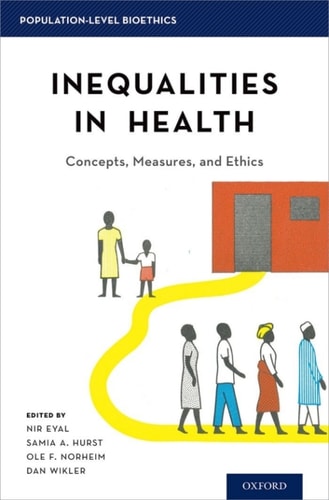
Inequalities in Health: Concepts, Measures, and Ethics
0
0
As an Amazon Associate and affiliate partner, Menrva Books earns from qualifying purchases. Learn more
Author Description
Of every thousand children born in Iceland, two will die before their first birthday, but in Mozambique the death rate is sixty times higher. Even within countries - including some of the wealthiest - inequalities in longevity and health can be substantial. In recent years, epidemiologists have documented the extent of these inequalities both between and within countries, stimulating in turn research both on their sources and on possible means for their alleviation. These extensive and influential efforts in research and in policy development have raised health inequalities to a prominent position among the central concerns of both national and global health.Less attention has been given to careful analysis and refinement of some key concepts and values that guide and motivate these studies of health inequalities. The essays in this book demonstrate the need to identify and debate alternative positions on the choice of measures of health inequality; the definitions of 'inequality' and 'inequity' in health, and their interrelationship; the ethical basis for attaching priority to narrowing gaps in longevity and health among individuals, groups, and societies; and the possible solutions to a series of puzzles involving uncertainty and variable population size.The authors of these essays are philosophers, economists, epidemiologists, and physicians contributing to our understanding of ethical issues in population health. Their contributions will be of interest to anyone interested in inequalities in health, including specialists in health policy, public health, epidemiology, moral philosophy, demography, and health economics.
Menrva's Summary
THE THESIS
This book investigates the conceptual, ethical, and methodological frameworks required to accurately define, measure, and address the persistent disparities in health outcomes across global populations. The authors, a multidisciplinary team of philosophers, economists, and epidemiologists, argue that while empirical documentation of health inequalities has advanced significantly, the underlying normative values and definitions remain under-analyzed. By synthesizing diverse academic perspectives, the text provides a rigorous foundation for evaluating how societies should prioritize the reduction of health gaps between individuals and groups.
THE SCOPE MAP
What You Will Find
- Comparative analysis of global health statistics and mortality rates across varying socioeconomic contexts.
- Philosophical frameworks for distinguishing between inequality and inequity in health outcomes.
- Methodological critiques of current measurement tools used in epidemiology and demography.
- Ethical arguments regarding the prioritization of health resource allocation and population-level interventions.
THE AUTHORITY PERSPECTIVE
Experts identify this work as a foundational text for scholars and policymakers navigating the intersection of moral philosophy and public health. Readers frequently note the academic density of the prose, which serves as a rigorous resource for those specializing in health policy and bioethics.
Page Count:
348
Publication Date:
2013-01-01
Publisher:
Oxford University Press
ISBN-10:
0199931402
ISBN-13:
9780199931408
Philosophy
Health Care
Epidemiology
Health Economics
Public Health
Bioethics
Sociology
Medical
Allied Health
Community Tags
Similar Books