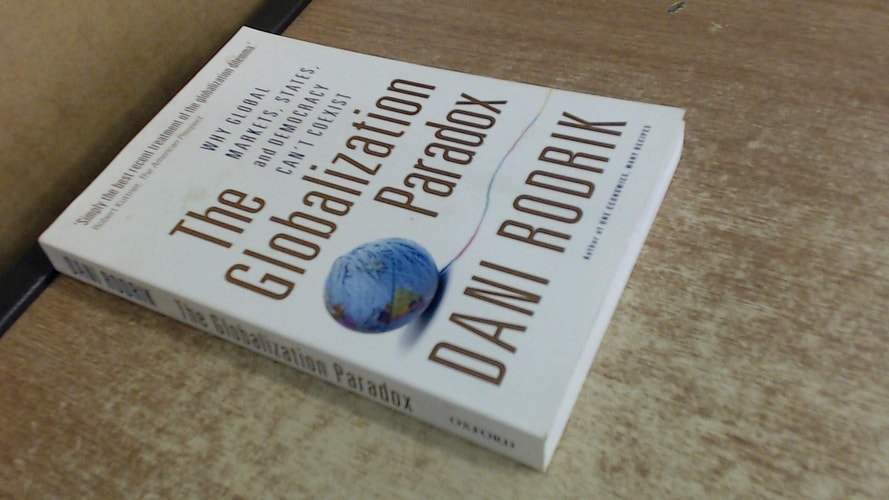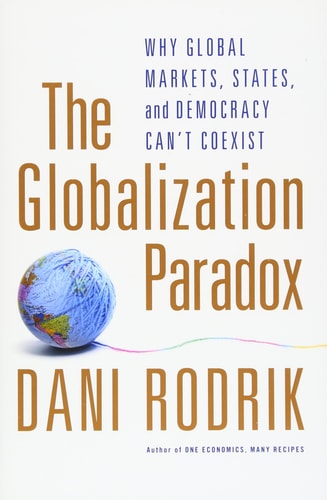
The Globalization Paradox: Why Global Markets, States, and Democracy Can't Coexist
0
0
As an Amazon Associate and affiliate partner, Menrva Books earns from qualifying purchases. Learn more
Author Description
For a century, economists have driven forward the cause of globalization in financial institutions, labour markets, and trade. Yet there have been consistent warning signs that a global economy and free trade might not always be advantageous. Where are the pressure points? What could be done about them? Dani Rodrik examines the back-story from its seventeenth-century origins through the milestones of the gold standard, the Bretton Woods Agreement, and the Washington Consensus, to the present day. Although economic globalization has enabled unprecedented levels of prosperity in advanced countries and has been a boon to hundreds of millions of poor workers in China and elsewhere in Asia, it is a concept that rests on shaky pillars, he contends. Its long-term sustainability is not a given. The heart of Rodrik's argument is a fundamental 'trilemma': that we cannot simultaneously pursue democracy, national self-determination, and economic globalization. Give too much power to governments, and you have protectionism. Give markets too much freedom, and you have an unstable world economy with little social and political support from those it is supposed to help. Rodrik argues for smart globalization, not maximum globalization.
Menrva's Summary
THE THESIS
Dani Rodrik investigates the fundamental incompatibility between deep economic globalization, the nation-state, and democratic politics. Drawing on his extensive background as a professor of international political economy, Rodrik analyzes the historical evolution of global trade systems from the seventeenth century to the modern era. He argues that the pursuit of hyper-globalization creates a 'trilemma' where societies must sacrifice either democratic sovereignty or national self-determination to maintain unfettered market integration.
THE SCOPE MAP
What You Will Find
- Historical analysis of the gold standard, the Bretton Woods Agreement, and the Washington Consensus.
- The theoretical framework of the 'political trilemma' of the world economy.
- Case studies examining the impact of trade liberalization on both advanced and developing economies.
- Policy recommendations advocating for 'smart globalization' that balances market openness with domestic social stability.
THE AUTHORITY PERSPECTIVE
Economists and political scientists frequently cite this work as a foundational text for understanding the inherent tensions within modern international trade policy. Readers often note the clarity of Rodrik's prose, which makes complex macroeconomic concepts accessible to a broad audience while maintaining rigorous analytical standards.
Page Count:
368
Publication Date:
2011-03-01
Publisher:
Oxford University Press
ISBN-10:
0199603332
ISBN-13:
9780199603336
Economics
History
Globalization
International relations
Finance