The Republic in Danger: Drusus Libo and the Succession of Tiberius
0
0
As an Amazon Associate and affiliate partner, Menrva Books earns from qualifying purchases. Learn more
Author Description
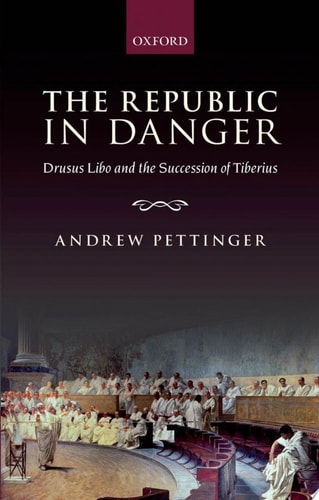
This is an open access title available under the terms of a CC BY-NC-ND 3.0 International licence. It is free to read at Oxford Scholarship Online and offered as a free PDF download from OUP and selected open access locations.The Republic in Danger offers a new interpretation of Roman political history for the years 6 BC to AD 16, focusing especially on the rise of Tiberius Caesar and his succession to Augustus, the founder of the Principate.The volume proposes a new and compelling model for understanding the end of Augustus' reign and the succession of Tiberius. While Tiberius' rise to supreme power was at the expense of Augustus' grandsons, who were all dead by the time Augustus was laid to rest, their supporters remained unconvinced that life was possible under the rule of Tiberius. The result was an alliance between the enemies of Tiberius and M. Scribonius Drusus Libo. Drusus Libo, an aristocrat connected to the house of the Caesar, committed suicide in AD 16 while on trial for treason. Pettinger argues that Drusus Libo's prosecution was due to his alliance with Tiberius' enemies who were planning to destroy his government and replace tyranny with republican democracy. Pettinger offers a comprehensive analysis of the struggle between Tiberius and the supporters of Augustus' grandsons, which has repercussions for our understanding of the creation of the Principate at Rome.
Menrva's Summary
THE THESIS
This work investigates whether the trial and suicide of M. Scribonius Drusus Libo in AD 16 represented a genuine attempt by Roman aristocrats to dismantle the Principate and restore republican democracy. Andrew Pettinger, a scholar of Roman political history, utilizes primary source analysis and prosopographical evidence to re-examine the transition of power from Augustus to Tiberius. He argues that the political instability of the era was not merely a series of isolated incidents, but a coordinated effort by the supporters of Augustus' deceased grandsons to challenge Tiberius' legitimacy. By situating the trial of Drusus Libo within this broader context, the author challenges traditional narratives regarding the inevitability of the imperial succession.
THE SCOPE MAP
What You Will Find
- A detailed political timeline of Rome from 6 BC to AD 16.
- An analysis of the factional alliances formed between the enemies of Tiberius and the Roman aristocracy.
- A re-evaluation of the legal proceedings against M. Scribonius Drusus Libo as a proxy for anti-imperial sentiment.
- A critical assessment of the structural shift from the late Augustan period to the early reign of Tiberius.
THE AUTHORITY PERSPECTIVE
Experts recognize this volume as a significant contribution to the study of the early Roman Empire, particularly for its focus on the often-overlooked political opposition to Tiberius. Readers frequently note the academic density of the prose and the author's rigorous engagement with the complexities of Roman political maneuvering.
Page Count:
280
Publication Date:
2012-07-26
Publisher:
Oxford University Press
ISBN-10:
0199601747
ISBN-13:
9780199601745
Biography
History
Political History
Roman History
Rome Italy
Italy history
Ancient History