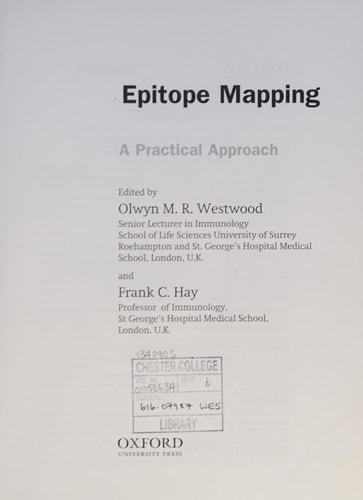
Epitope Mapping: A Practical Approach
0
0
As an Amazon Associate and affiliate partner, Menrva Books earns from qualifying purchases. Learn more
Author Description
Epitope Mapping covers all the major methods for the identification and definition of epitopes. The Pepscan assay is used to define B cell epitopes and makes use of synthetic peptides but can only be used if the amino acid sequence is known. It can be adapted for the delineation of both helper T cells and cytotoxic T cells. The identification of combined B and T cell epitopes can also be achieved using synthetic peptides. There are other methodologies for analysing for cytotoxic T cell epitopes such as the purification of antigens presented by MHC class I molecules and expression cloning. Site directed mutagenesis is also a powerful tool in epitope mapping and can be used to evaluate the role of single amino acids in immune complex formation. Protein footprinting makes use of monoclonal antibodies produced by hybridoma technology and relies on the fact that the epitope is protected from cleavage when bound as an antibody-antigen complex. It is only useful for small antigens. Other monoclonal antibody assays such as enzyme linked immunosorbent assay and haemaglutination and slot-blotting may also be used in epitope mapping. Random phage display libraries bring together the genetic and amino acid peptide sequence and can be screened with antibody and the resulting peptide DNA sequenced to confirm the amino acid sequence of a specific epitope. Investigation of carbohydrates can also be useful to epitope mapping as deglycosylation can lead to loss of antigenic activity. Epitopes are important to the pharmaceutical industry and wherever appropriate, pharmaceutical applications of the methods described are included. For each method there is a description of the technology, protocols, trouble-shooting, and advice on when to use the method. This book will therefore be invaluable to any researcher involved in epitope mapping.
Menrva's Summary
THE THESIS
This volume investigates the diverse methodologies required for the identification and precise definition of epitopes within immunological research. Edited by Olwyn M. R. Westwood and Frank C. Hay, the text provides a comprehensive technical framework for researchers. It synthesizes various experimental approaches, ranging from synthetic peptide assays to advanced molecular techniques, to assist scientists in mapping antigenic determinants effectively.
THE SCOPE MAP
What You Will Find
- Detailed protocols for Pepscan assays and site directed mutagenesis.
- Methodologies for analyzing cytotoxic T cell epitopes and MHC class I molecule purification.
- Applications of hybridoma technology and protein footprinting for small antigens.
- Guidance on pharmaceutical industry applications and troubleshooting for each described technique.
THE AUTHORITY PERSPECTIVE
Experts recognize this text as a standard laboratory reference for researchers focusing on epitope identification. Readers frequently note the practical utility of the included protocols and the clarity of the troubleshooting advice provided for complex immunological assays.
Page Count:
304
Publication Date:
2001-03-15
Publisher:
Oxford University Press
ISBN-10:
0199636524
ISBN-13:
9780199636525
Science
Laboratory Manual
Biochemistry
Biology
Reference
Immunology
Community Tags
Similar Books