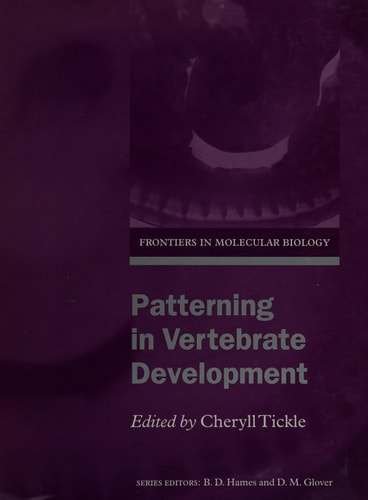
Patterning in Vertebrate Development (Frontiers in Molecular Biology, 41)
0
0
As an Amazon Associate and affiliate partner, Menrva Books earns from qualifying purchases. Learn more
Author Description
One of the most fascinating problems in biology is how a single cell, the fertilised egg, gives rise to a new individual. The fertilised egg divides many times to form an embryo. This volume in the Frontiers in Molecular Biology series discusses the methods by which cells in distinct regions of an embryo become different, a process known as patterning.Patterning is fundamental to establishing the spatial organisation of the developing embryo. It ensures that all the parts of the body are generated and that they form in exactly the right places. The ultimate in patterning is the formation of precise arrangements of specialised cells and tissues within each organ. Understanding the process of patterning during the embryonic development of vertebrates is a particular challenge for developmental biologists because vertebrates have an intricate and complex anatomy and histology.The first two chapters of Patterning in Vertebrate Development are introductory, explaining to the reader the general principles of vertebrate patterning and early embryology. The subsequent chapters address patterning in both nervous system and specific parts of the body. Each chapter provides a detailed review of current research in a specific area of interest. These include topics such as neural specification, antero-posterior patterning of the neural tube, and molecular basis of vertebrate limb development. Throughout the volume, examples are drawn from a number of species, and particular emphasis is placed on recent discoveries about the molecular basis of patterning in vertebrates. The book concludes with a chapter which revisits many of the regions of the embryo previously discussed from an evolutionary perspective.
Menrva's Summary
THE THESIS
This volume investigates the complex molecular mechanisms that govern how a single fertilized egg transforms into a spatially organized vertebrate embryo. Author Cheryll Tickle compiles research to explain the fundamental principles of patterning, the process by which cells in distinct embryonic regions acquire specific identities. The text synthesizes current developmental biology research to address how intricate anatomical structures are generated and positioned during vertebrate growth.
THE SCOPE MAP
What You Will Find
- Principles of early vertebrate embryology and general patterning mechanisms.
- Detailed analysis of neural specification and neural tube development.
- Examination of the molecular basis of vertebrate limb formation.
- Comparative studies across multiple vertebrate species.
- An evolutionary perspective on embryonic regionalization.
THE AUTHORITY PERSPECTIVE
Experts recognize this volume as a specialized resource for students and researchers focusing on developmental biology. Readers frequently note the technical density of the prose, which provides a comprehensive review of molecular research within the field.
Page Count:
268
Publication Date:
2003-03-20
Publisher:
Oxford University Press
ISBN-10:
0199638691
ISBN-13:
9780199638697
Science
Genetics
Embryology
Developmental Biology
Vertebrates
Biology
Community Tags
Similar Books