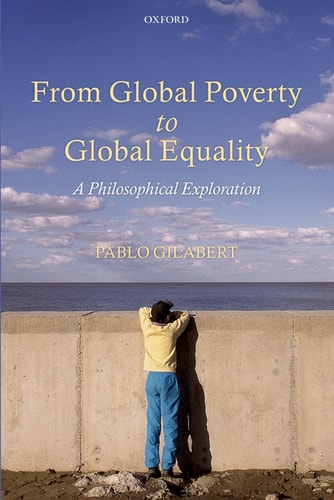
From Global Poverty to Global Equality: A Philosophical Exploration
0
0
As an Amazon Associate and affiliate partner, Menrva Books earns from qualifying purchases. Learn more
Author Description
Do we have positive duties to help others in need or are our moral duties only negative, focused on not harming them? Is their scope global? Should we aim for global equality besides the eradication of severe global poverty? Is a humanist approach to egalitarian distribution based on universal human rights defensible, or must egalitarian distribution be seen in an associativist way, as tracking existing frameworks such as statehood and economic interdependence? Are the eradication of global poverty and the achievement of global equality practically feasible or are they hopelessly utopian wishes?This book argues that there are basic positive duties of justice to help eradicate severe global poverty; that global egalitarian principles are also reasonable even if they cannot be fully realized in the short term; and that there are dynamic duties to enhance the feasibility of the transition from global poverty to global equality in the face of nonideal circumstances such as the absence of robust international institutions and the lack of a strong ethos of cosmopolitan solidarity. The very notion of feasibility is crucial for normative reasoning, but has received little explicit philosophical discussion. This book offers a systematic exploration of that concept as well as of its application to global justice. It also arbitrates the current debate between humanist and associativist accounts of the scope of distributive justice. Drawing on moral contractualism (the view that we ought to follow the principles that no one could reasonably reject), this book provides a novel defense of humanism, challenges several versions of associativism (which remains the most popular view among political philosophers), and seeks to integrate the insights underlying both views.
Menrva's Summary
THE THESIS
This book investigates whether humanity possesses positive moral duties to eradicate global poverty and pursue global equality, and whether such objectives are practically feasible. Pablo Gilabert, a scholar in political philosophy, utilizes moral contractualism to construct a framework that bridges the gap between humanist and associativist perspectives on distributive justice. By analyzing the concept of feasibility in nonideal circumstances, the author argues that global egalitarian principles remain normatively sound and actionable despite the current lack of robust international institutions.
THE SCOPE MAP
What You Will Find
- A systematic philosophical analysis of the concept of feasibility in normative reasoning.
- A comparative evaluation of humanist versus associativist accounts of distributive justice.
- A defense of positive duties of justice grounded in universal human rights.
- Strategies for transitioning from current global poverty to a state of greater equality.
THE AUTHORITY PERSPECTIVE
Experts recognize this work as a significant contribution to the debate on global distributive justice, particularly for its rigorous application of moral contractualism. Readers frequently note the academic density of the prose, which is intended for advanced students and scholars of political philosophy.
Page Count:
345
Publication Date:
2012-05-23
Publisher:
Oxford University Press
ISBN-10:
019963971X
ISBN-13:
9780199639717
Economics
Philosophy
Poverty
Ethics
Social justice
Community Tags
Similar Books