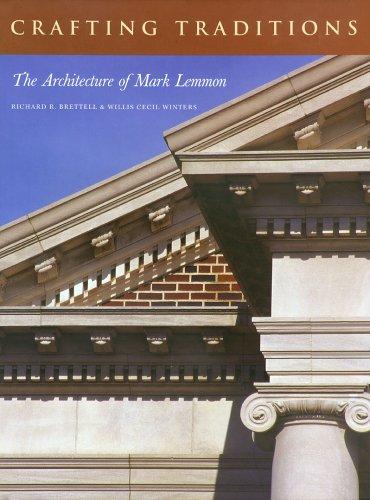
Crafting Traditions
0
0
As an Amazon Associate and affiliate partner, Menrva Books earns from qualifying purchases. Learn more
Author Description
This volume is a testament to Mark Lemmon's ideas of architectural civility, solidity, and classicism - considered retrograde by many architectural historians, though taking on a renewed relevance after the post-modernist revisionism of the 1970s. Having completed his architectural education at MIT and a tour of duty as a military engineer in Europe during World War I, Lemmon, a Texas native, moved to Dallas and began a distinguished career spanning over forty years from the 1920s to the 1960s. Lemmon's greatest contributions to Texas architecture were his designs for educational and religious institutions. His most important clients were the Dallas Independent School District, Southern Methodist University (for which he designed eighteen Georgian style buildings), the Port Arthur School District, and the University of Texas at Austin. In styles that vary from Romanesque to Moderne, these buildings define their neighborhoods and place their users in a system of civilized architectural allusions that raises the level of urban culture.--BOOK JACKET.
Menrva's Summary
THE THESIS
This volume examines the architectural philosophy and career of Mark Lemmon, a Texas architect whose work spanned over forty years. Lemmon, educated at MIT and serving as a military engineer in Europe, established a distinguished career in Dallas from the 1920s to the 1960s. His most significant contributions were to educational and religious institutions, notably designing eighteen Georgian-style buildings for Southern Methodist University and numerous structures for the Dallas Independent School District and the University of Texas at Austin. Lemmon's designs, ranging from Romanesque to Moderne, aimed to create a sense of architectural civility and classicism, which, though sometimes viewed as retrograde, offered a renewed relevance in the post-modern era.
THE SCOPE MAP
- Analysis of Mark Lemmon's architectural philosophy, emphasizing civility, solidity, and classicism.
- Detailed examination of Lemmon's career from the 1920s to the 1960s in Dallas.
- Focus on Lemmon's key projects for educational institutions, including Southern Methodist University, Dallas Independent School District, and the University of Texas at Austin.
- Exploration of architectural styles employed by Lemmon, from Romanesque to Moderne.
- Discussion of the reception of Lemmon's work within architectural history, particularly in relation to post-modernism.
THE AUTHORITY PERSPECTIVE
The book presents Mark Lemmon's architectural contributions as a significant, albeit sometimes overlooked, aspect of Texas's built environment. It highlights his dedication to classical principles and their enduring relevance. The work positions Lemmon's designs as defining elements of their urban contexts, contributing to a higher level of civic culture through their architectural allusions. The volume serves as a testament to his distinct approach to architectural design.
Page Count:
160
Publication Date:
2005-01-01
ISBN-10:
087074495X
ISBN-13:
9780870744952
History
Biography
Non-Fiction
Architecture
Community Tags
Similar Books