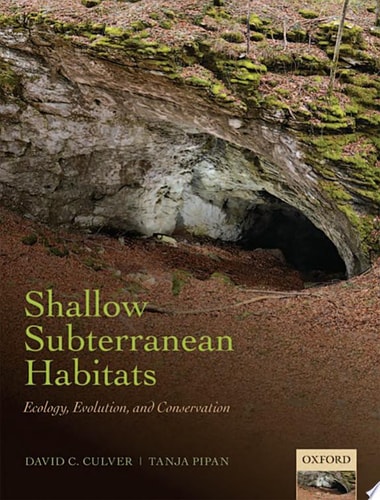
Shallow Subterranean Habitats: Ecology, Evolution, and Conservation
0
0
As an Amazon Associate and affiliate partner, Menrva Books earns from qualifying purchases. Learn more
Author Description
Shallow subterranean habitats (SSHs) are areas of habitable space that are less than 10 m in depth from the surface. These range from large areas such as shallow caves and lava tubes, to tiny areas such as cracks in ceilings, or spaces in soil. Whilst being very different in many ways, they are often bound together by shared characteristics of the habitats and their faunas, and their study can help us to understand subterranean habitats in general. This book concentrates on the more typical SSHs of intermediate size (seepage springs, spaces between rocks, cracks in lava etc.), describing the habitats, their fauna, and the ecological and evolutionary questions posed. Similarities and differences between the habitats are considered and discussed in a broader ecological and evolutionary context. The book is mainly aimed at students and researchers in the field of subterranean biology, but will also be of interest to a wider range of ecologists, evolutionary biologists, freshwater biologists, and conservationists. There will also be an audience of environmental professionals.
Menrva's Summary
THE THESIS
What are the defining ecological and evolutionary characteristics of shallow subterranean habitats (SSHs) and how do they inform our broader understanding of subterranean biology? David C. Culver and Tanja Pipan synthesize current research on habitats located within 10 meters of the surface, ranging from lava tubes to interstitial soil spaces. The authors provide a framework for comparing these diverse environments, emphasizing the unique faunal adaptations and environmental pressures that distinguish SSHs from deeper cave systems. By integrating ecological theory with evolutionary biology, the text establishes a baseline for the study and protection of these often-overlooked ecosystems.
THE SCOPE MAP
What You Will Find
- Comprehensive analysis of SSH types including seepage springs, rock crevices, and lava cracks.
- Examination of faunal diversity and evolutionary adaptations specific to shallow subterranean zones.
- Comparative ecological frameworks for understanding connectivity between surface and deep subterranean environments.
- Conservation strategies and management priorities for fragile subterranean biodiversity.
THE AUTHORITY PERSPECTIVE
Experts identify this work as a foundational text for students and researchers specializing in subterranean biology and freshwater ecology. Readers frequently note the technical density of the prose, which serves as a rigorous reference for environmental professionals and academic biologists.
Page Count:
288
Publication Date:
2014-08-12
Publisher:
Oxford University Press
ISBN-10:
0199646171
ISBN-13:
9780199646173
Science
Evolution
Conservation
Zoology
Speleology
Biology
Ecology
Community Tags
Similar Books