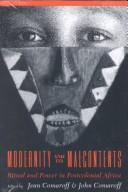
Modernity and Its Malcontents
0
0
As an Amazon Associate and affiliate partner, Menrva Books earns from qualifying purchases. Learn more
Author Description
What role does ritual play in the everyday lives of modern Africans? How are so-called "traditional" cultural forms deployed by people seeking empowerment in a world where "modernity" has failed to deliver on its promises? Some of the essays in Modernity and Its Malcontents address familiar anthropological issues--like witchcraft, myth, and the politics of reproduction--but treat them in fresh ways, situating them amidst the polyphonies of contemporary Africa. Others explore distinctly nontraditional subjects--among them the Nigerian popular press and soul-eating in Niger--in such a way as to confront the conceptual limits of Western social science. Together they demonstrate how ritual may be powerfully mobilized in the making of history, present, and future. Addressing challenges posed by contemporary African realities, the authors subject such concepts as modernity, ritual, power, and history to renewed critical scrutiny. Writing about a variety of phenomena, they are united by a wish to preserve the diversity and historical specificity of local signs and practices, voices and perspectives. Their work makes a substantial and original contribution toward the historical anthropology of Africa.
Menrva's Summary
THE THESIS
This collection interrogates the complex interplay between ritual and modernity in contemporary Africa. The essays explore how Africans, facing the unfulfilled promises of modernity, utilize 'traditional' cultural forms like witchcraft and myth for empowerment. The authors examine phenomena ranging from the Nigerian popular press to soul-eating in Niger, challenging Western social science's conceptual limits and demonstrating ritual's power in shaping history. The work critically scrutinizes concepts of modernity, ritual, power, and history, preserving the diversity and specificity of local signs, practices, voices, and perspectives.
THE SCOPE MAP
- What role does ritual play in the everyday lives of modern Africans?
- How are "traditional" cultural forms deployed by people seeking empowerment in a world where "modernity" has failed to deliver on its promises?
- Essays address familiar anthropological issues like witchcraft, myth, and the politics of reproduction in fresh ways.
- Exploration of distinctly nontraditional subjects like the Nigerian popular press and soul-eating in Niger.
- Demonstration of how ritual may be powerfully mobilized in the making of history, present, and future.
- Renewed critical scrutiny of concepts such as modernity, ritual, power, and history.
- Preservation of the diversity and historical specificity of local signs and practices, voices and perspectives.
- A substantial and original contribution toward the historical anthropology of Africa.
THE AUTHORITY PERSPECTIVE
The essays in Modernity and Its Malcontents are recognized for their substantial and original contribution to the historical anthropology of Africa. They are noted for their critical engagement with concepts of modernity and their examination of how ritual is mobilized in contemporary African societies. The collection is praised for its commitment to preserving the diversity and historical specificity of local signs, practices, voices, and perspectives. This work challenges the conceptual limits of Western social science by situating familiar anthropological issues within the polyphonies of contemporary Africa.
Page Count:
233
Publication Date:
1993-01-01
ISBN-10:
0226114392
Politics
Non-Fiction
Science
History
Sociology
Anthropology
Community Tags
Similar Books














