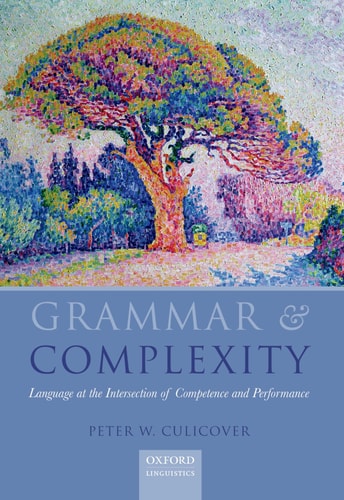
Grammar and Complexity: Language at the Intersection of Competence and Performance
0
0
As an Amazon Associate and affiliate partner, Menrva Books earns from qualifying purchases. Learn more
Author Description
This book combines ideas about the architecture of grammar and language acquisition, processing, and change to explain why languages show regular patterns when there is so much irregularity in their use and so much complexity when there is such regularity in linguistic phenomena. Peter Culicover argues that the structure of language can be understood and explained in terms of two kinds of complexity: firstly that of the correspondence between form and meaning; secondly in the real-time processes involved in the construction of meanings in linguistic expressions.Mainstream generative theory is based on inherent linguistic competence and on the regularities within and across languages, with the exceptional aspects of any language frequently put to one side. But a language's irregular and unique features offer, the author argues, fundamental insights into both the nature of language and the way it is produced and understood.Peter Culicover's new book offers a pertinent and original contribution to key current debates in linguistic theory. It will interest scholars and advanced students of linguists of all theoretical persuasions.
Menrva's Summary
THE THESIS
This book investigates the fundamental tension between the regular patterns of language and the inherent irregularity found in actual linguistic usage. Peter W. Culicover, a prominent linguist, utilizes a framework that integrates grammar architecture with language acquisition, processing, and historical change. He argues that by examining the irregular and unique features of language—often ignored by mainstream generative theory—one can gain deeper insights into the nature of linguistic competence and performance.
THE SCOPE MAP
What You Will Find
- Analysis of the correspondence between linguistic form and meaning.
- Examination of real-time cognitive processes involved in meaning construction.
- Critique of mainstream generative theory regarding the treatment of linguistic exceptions.
- Theoretical synthesis of grammar architecture, acquisition, and language change.
THE AUTHORITY PERSPECTIVE
Scholars and advanced students of linguistics recognize this work as a significant contribution to ongoing debates regarding the nature of language structure. Readers frequently note the academic density of the prose, which is intended for those already familiar with current theoretical frameworks in the field.
Page Count:
352
Publication Date:
2013-05-19
Publisher:
Oxford University Press
ISBN-10:
0199654603
ISBN-13:
9780199654604
Grammar
Academic
Linguistics
Community Tags
Other Editions(2)

Similar Books