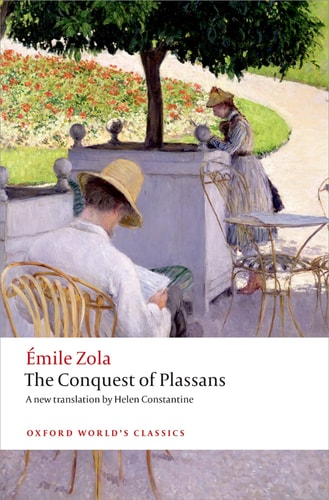
The Conquest of Plassans
0
0
As an Amazon Associate and affiliate partner, Menrva Books earns from qualifying purchases. Learn more
Author Description
'Abbe Faujas has arrived!'The arrival of Abbe Faujas in the provincial town of Plassans has profound consequences for the community, and for the family of François Mouret in particular. Faujas and his mother come to lodge with François, his wife Marthe, and their three children, and Marthe quickly falls under the influence of the priest. Ambitious and unscrupulous, Faujas gradually infiltrates into all quarters of the town, intent on political as well as religious conquest. Intrigue, slander, and insinuation tear the townsfolk apart, creating suspicion and distrust, and driving the Mourets to ever more extreme actions.The fourth novel in Zola's Rougon-Macquart sequence, The Conquest of Plassans returns to the fictional Provençal town from which the family sprang in The Fortune of the Rougons. In one of the most psychological of his novels, Zola links small-town politics to the greater political and national dramas of the Second Empire.The first modern translation for more than fifty years and the first critical edition, features a fascinating introduction and helpful notes by Man Booker Prize nominated novelist and poet Patrick McGuinness.ABOUT THE SERIES: For over 100 years Oxford World's Classics has made available the widest range of literature from around the globe. Each affordable volume reflects Oxford's commitment to scholarship, providing the most accurate text plus a wealth of other valuable features, including expert introductions by leading authorities, helpful notes to clarify the text, up-to-date bibliographies for further study, and much more.
Menrva's Summary
THE PULSE
The arrival of the ambitious Abbe Faujas in the provincial town of Plassans triggers a calculated campaign of infiltration that destabilizes the social and domestic order of the Mouret family. Seeking to consolidate political and religious power, Faujas exploits the vulnerabilities of the townspeople through manipulation and psychological pressure. The narrative follows the slow erosion of the Mouret household as Marthe Mouret falls under the priest's influence, leading to a series of escalating conflicts that mirror the broader political instability of the Second Empire. Zola employs a third-person omniscient perspective to document the methodical dismantling of provincial life.
INSIDE THE PAGES
- Detailed examination of provincial social hierarchies and local politics
- Psychological exploration of religious influence and domestic manipulation
- Integration of personal family drama with national political shifts
- Use of the fictional town of Plassans as a microcosm for the Second Empire
- Character-driven narrative focusing on the corruption of moral integrity
- Precise descriptions of the physical environment and domestic spaces
- Gradual escalation of tension through slander and social insinuation
- Critical analysis of the intersection between church authority and state power
THE COLLECTIVE ECHO
Readers and critics frequently highlight the novel's clinical precision in depicting the slow decay of a family unit under external pressure. Discussion often centers on Zola's ability to weave intimate domestic tragedy into the larger, more impersonal machinery of political ambition. Many observers note that the pacing is deliberate, allowing the reader to witness the subtle, incremental nature of the protagonist's corruption. The work is often praised for its atmospheric rendering of the Provençal setting, which serves as a stark backdrop for the unfolding moral collapse. Scholars frequently point to this volume as a pivotal entry in the Rougon-Macquart cycle for its focus on psychological realism.
Page Count:
352
Publication Date:
2014-09-01
Publisher:
Oxford University Press
ISBN-10:
0199664781
ISBN-13:
9780199664788
Political
classic
Realism
Historical
French literature
Community Tags
Similar Books