
Belinda
0
0
As an Amazon Associate and affiliate partner, Menrva Books earns from qualifying purchases. Learn more
Author Description
The lively comedy of this novel in which a young woman comes of age amid the distractions and temptations of London high society belies the challenges it poses to the conventions of courtship, the dependence of women, and the limitations of domesticity. Contending with the perils and the varied cast of characters of the marriage market, Belinda strides resolutely toward independence. Admired by her contemporary, Jane Austen, and later by Thackeray and Turgenev, Edgeworth tackles issues of gender and race in a manner at once comic and thought-provoking. The 1802 text used in this edition also confronts the difficult and fascinating issues of racism and mixed marriage, which Edgeworth toned down in later editions.
Menrva's Summary
THE PULSE
Belinda Portman enters the complex social hierarchy of London, where she must navigate the pressures of the marriage market while maintaining her personal autonomy. As a young woman under the guardianship of the fashionable Lady Delacour, Belinda faces the conflicting expectations of high society and her own developing moral compass. She encounters various suitors and social figures who represent the rigid constraints placed upon women of her era. The narrative utilizes a third-person perspective to examine the interplay between individual desire and the performative nature of eighteenth-century domestic life.
INSIDE THE PAGES
- Exploration of the marriage market as a social institution
- Satirical portrayal of London high society
- Focus on female independence and agency
- Examination of domesticity and its limitations
- Inclusion of themes regarding race and interracial marriage
- Contrast between superficial fashion and genuine character
- Use of witty, observational dialogue
- Critique of contemporary courtship conventions
THE COLLECTIVE ECHO
Readers and critics frequently note the sharp, satirical tone that Edgeworth employs to dissect the social mores of her time. Discussion often centers on the protagonist's development as she resists the reductive roles assigned to her by the marriage market. Scholars highlight the significance of the 1802 text, particularly its candid treatment of race and social prejudice, which distinguishes it from later, more sanitized versions. The work is often compared to the novels of Jane Austen for its focus on domestic realism and the internal lives of women. Many readers appreciate the balance between the lighthearted comedy of manners and the underlying serious critique of gender dynamics.
Page Count:
544
Publication Date:
1994-12-15
Publisher:
Oxford University Press
ISBN-10:
0192831232
ISBN-13:
9780192831231
Romance
classic
London England
Coming of Age
Social Satire
England
Historical
Community Tags
Other Editions(15)

Digireads.com
2021
Default edition
HardPress
2020
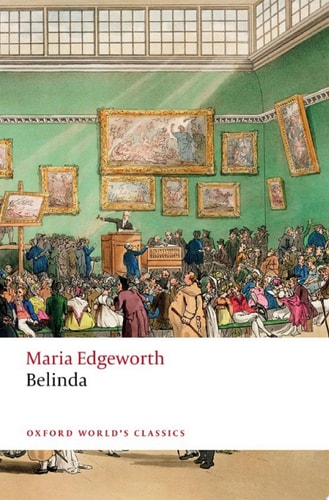
OUP Oxford
2020

Creative Media Partners, LLC
2018
Creative Media Partners, LLC
2018

CreateSpace Independent Publishing Platform
2018
Creative Media Partners, LLC
2018

Nabu Press
2011

Kessinger Publishing, LLC
2010
Nabu Press
2010

General Books LLC
2010
Nabu Press
2010

Pickering & Chatto
2003

Oup Oxford
1999
Oxford University Press
1994
Similar Books



Reader Comments
Share Your Thoughts
No comments yet. Be the first to share your thoughts!