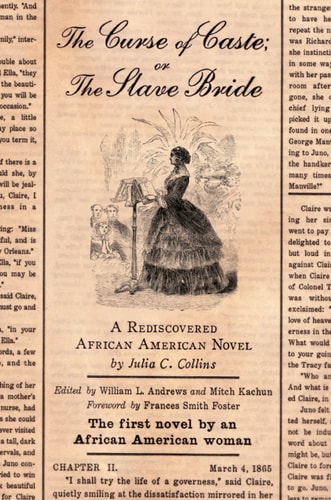
The Curse of Caste; or The Slave Bride: A Rediscovered African American Novel
0
0
As an Amazon Associate and affiliate partner, Menrva Books earns from qualifying purchases. Learn more
Author Description
In 1865, The Christian Recorder, the national newspaper of the African Methodist Episcopal Church, serialized The Curse of Caste; or The Slave Bride, a novel written by Mrs. Julia C. Collins, an African American woman living in the small town of Williamsport, Pennsylvania. The first novel ever published by a black American woman, it is set in antebellum Louisiana and Connecticut, and focuses on the lives of a beautiful mixed-race mother and daughter whose opportunities for fulfillment through love and marriage are threatened by slavery and caste prejudice. The text shares much with popular nineteenth-century women's fiction, while its dominant themes of interracial romance, hidden African ancestry, and ambiguous racial identity have parallels in the writings of both black and white authors from the period. Begun in the waning months of the Civil War, the novel was near its conclusion when Julia Collins died of tuberculosis in November of 1865. In this first-ever book publication of The Curse of Caste; or The Slave Bride, the editors have composed a hopeful and a tragic ending, reflecting two alternatives Collins almost certainly would have considered for the closing of her unprecedented novel. In their introduction, the editors offer the most complete and current research on the life and community of an author who left few traces in the historical record, and provide extensive discussion of her novel's literary and historical significance. Collins's published essays, which provide intriguing glimpses into the mind of this gifted but overlooked writer, are included in what will prove to be the definitive edition of a major new discovery in African American literature. Its publication contributes immensely to our understanding of black American literature, religion, women's history, community life, and race relations during the era of United States emancipation.
Menrva's Summary
THE PULSE
The narrative centers on the precarious lives of a mixed-race mother and daughter as they navigate the restrictive social hierarchies of antebellum Louisiana and Connecticut. The protagonists seek personal fulfillment and romantic stability, yet their aspirations are consistently undermined by the pervasive influence of slavery and rigid caste prejudice. The story utilizes a nineteenth-century literary framework, emphasizing the tension between individual desire and societal expectations regarding racial identity. As the plot progresses, the characters must confront the consequences of hidden ancestry and the systemic barriers that dictate their social standing.
INSIDE THE PAGES
- Exploration of the intersection between race and social caste in the 19th century.
- Utilization of the sentimental novel tradition common to the era.
- Focus on the complexities of interracial romance and identity.
- Geographic contrast between the antebellum South and the North.
- Examination of the impact of slavery on domestic and personal life.
- Inclusion of dual endings provided by editors to reflect the author's potential intent.
- Integration of themes regarding hidden ancestry and social mobility.
- Contextualization of the work within the broader scope of early African American literature.
THE COLLECTIVE ECHO
Readers and scholars frequently highlight the historical significance of this work as the first novel published by an African American woman. Discussion often centers on the stylistic parallels between Collins's writing and the popular sentimental fiction of the mid-nineteenth century. Critics note the effectiveness of the narrative in addressing the anxieties surrounding racial identity and the social constraints of the period. The inclusion of the editors' dual endings generates significant interest, as it invites readers to engage with the creative process and the tragic circumstances of the author's death. The text is widely regarded as a vital contribution to the understanding of race relations and women's history during the era of emancipation.
Page Count:
203
Publication Date:
2006-01-01
Publisher:
Oxford University Press
ISBN-10:
0190293861
ISBN-13:
9780190293864
Historical Fiction
Romance
Ethnic Studies
New Orleans
English
classic
19th Century
Social Issues
African American
English & College Success
Community Tags
Similar Books