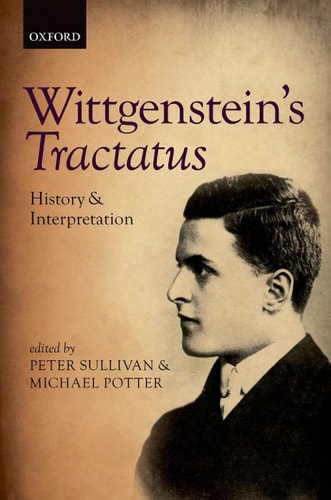
Wittgenstein's Tractatus: History and Interpretation
0
0
As an Amazon Associate and affiliate partner, Menrva Books earns from qualifying purchases. Learn more
Author Description
This volume of newly written chapters on the history and interpretation of Wittgenstein's Tractatus represents a significant step beyond the polemical debate between broad interpretive approaches that has recently characterized the field. Some of the contributors might count their approach as "new" or "resolute," while others are more 'traditional', but all are here concerned primarily with understanding in detail the structure of argument that Wittgenstein presents within the Tractatus, rather than with its final self-renunciation, or with the character of the understanding that renunciation might leave behind. The volume makes a strong case that close investigation, both biographical and textual, into the composition of the Tractatus, and into the various influences on it, still has much to yield in revealing the complexity and fertility of Wittgenstein's early thought. Amongst these influences Kant and Kierkegaard are considered alongside Wittgenstein's immediate predecessors in the analytic tradition. The themes explored range across the breadth of Wittgenstein's book, and include his accounts of ethics and aesthetics, as well as issues in metaphysics and the philosophy of mind, and aspects of the logical framework of his account of representation. The contrast of saying and showing, and Wittgenstein's attitude to the inexpressible, is of central importance to many of the contributions. By approaching this concern through the various first-level issues that give rise to it, rather than from entrenched schematic positions, the contributors demonstrate the possibility of a more inclusive, constructive and fruitful mode of engagement with Wittgenstein's text and with each other.
Menrva's Summary
THE THESIS
This volume investigates the structural arguments and historical influences within Ludwig Wittgenstein's Tractatus Logico-Philosophicus to move beyond polarized interpretive debates. The editors, Michael D. Potter and Peter Sullivan, compile a series of newly written chapters that prioritize detailed textual and biographical analysis over broad, schematic readings. By examining the work's composition and its intellectual lineage, the contributors argue that a granular approach reveals the enduring complexity and fertility of Wittgenstein's early philosophical framework.
THE SCOPE MAP
What You Will Find
- Historical analysis of influences including Kant, Kierkegaard, and early analytic predecessors.
- Detailed examinations of the logical framework regarding representation.
- Investigations into ethics, aesthetics, metaphysics, and philosophy of mind.
- Critical discussion on the distinction between saying and showing and the nature of the inexpressible.
THE AUTHORITY PERSPECTIVE
Experts view this collection as a constructive intervention in Wittgensteinian scholarship that successfully bridges the gap between 'resolute' and 'traditional' interpretive camps. Readers frequently note the academic density of the prose, which is intended for advanced students and professional philosophers engaged in rigorous textual study.
Page Count:
282
Publication Date:
2013-05-05
Publisher:
Oxford University Press
ISBN-10:
0199665788
ISBN-13:
9780199665785
Philosophy
Epistemology
Metaphysics
Logic
Community Tags
Similar Books