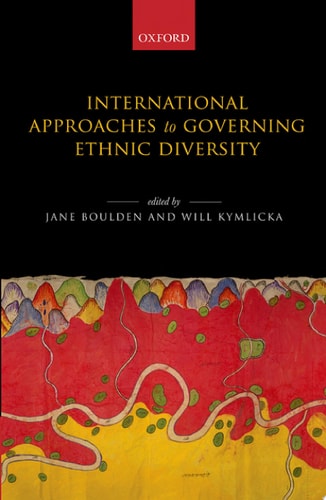
International Approaches to Governing Ethnic Diversity
0
0
As an Amazon Associate and affiliate partner, Menrva Books earns from qualifying purchases. Learn more
Author Description
One of the most remarkable features of the post-Cold War period has been the upsurge of international involvement in questions of ethnic diversity. From the United Nations and the European Court of Human Rights to diverse international philanthropic and advocacy organizations, a wide range of international actors have adopted policies and principles for addressing questions of ethnic rights, identity, and conflict.International Approaches to Governing Ethnic Diversity explores whether and how these international actors contribute to the peaceful and democratic governance of ethnic diversity. It focuses on two broad areas of international work: the evolution of international legal norms regarding the rights of minorities and indigenous peoples, and international approaches to conflict and post-conflict development. The book charts new territory by mapping the range of international actors who affect the governance of ethnic diversity, and exploring their often contradictory roles and impacts. Most international actors come to questions of ethnic diversity indirectly and reluctantly, on the basis of widely varying mandates many of which were established to fulfill other objectives.They naturally therefore have different priorities and perspectives. And yet, the book identifies a striking convergence amongst international actors around discourses of diversity and equality, demonstrating the existence of an epistemic community where actors work within common vocabularies, discourses and principles that attempt to link human rights, pluralism, development and peace.
Menrva's Summary
THE THESIS
This book investigates whether and how international actors contribute to the peaceful and democratic governance of ethnic diversity in the post-Cold War era. Jane Boulden and Will Kymlicka, both established scholars in political science and international relations, synthesize research on the evolution of international legal norms and conflict resolution strategies. They argue that while international organizations often engage with ethnic diversity indirectly, a distinct epistemic community has emerged that promotes a shared vocabulary of human rights, pluralism, and development.
THE SCOPE MAP
What You Will Find
- Analysis of international legal norms concerning the rights of minorities and indigenous peoples.
- Examination of the roles played by the United Nations, the European Court of Human Rights, and various philanthropic organizations.
- Assessment of international interventions in conflict and post-conflict development scenarios.
- Exploration of the contradictory impacts resulting from the varying mandates of international actors.
THE AUTHORITY PERSPECTIVE
Experts identify this work as a foundational text for understanding the intersection of international law and ethnic governance. Readers frequently note the academic density of the prose and the rigorous mapping of institutional mandates within the global political landscape.
Page Count:
336
Publication Date:
2015-04-12
Publisher:
Oxford University Press
ISBN-10:
0199676585
ISBN-13:
9780199676583
Human rights
Ethnic Groups
International relations
Ethnic Studies
Sociology
Community Tags
Similar Books