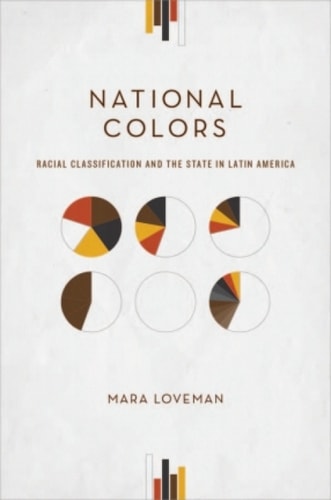
National Colors: Racial Classification and the State in Latin America
0
0
As an Amazon Associate and affiliate partner, Menrva Books earns from qualifying purchases. Learn more
Author Description
The era of official color-blindness in Latin America has come to an end. For the first time in decades, nearly every state in Latin America now asks their citizens to identify their race or ethnicity on the national census. Most observers approvingly highlight the historic novelty of these reforms, but National Colors shows that official racial classification of citizens has a long history in Latin America. Through a comprehensive analysis of the politics and practice of official ethnoracial classification in the censuses of nineteen Latin American states across nearly two centuries, this book explains why most Latin American states classified their citizens by race on early national censuses, why they stopped the practice of official racial classification around mid-twentieth century, and why they reintroduced ethnoracial classification on national censuses at the dawn of the twenty-first century. Beyond domestic political struggles, the analysis reveals that the ways that Latin American states classified their populations from the mid-nineteenth century onward responded to changes in international criteria for how to construct a modern nation and promote national development. As prevailing international understandings of what made a political and cultural community a modern nation changed, so too did the ways that Latin American census officials depicted diversity within national populations. The way census officials described populations in official statistics, in turn, shaped how policymakers viewed national populations and informed their prescriptions for national development--with consequences that still reverberate in contemporary political struggles for recognition, rights, and redress for ethnoracially marginalized populations in today's Latin America.
Menrva's Summary
THE THESIS
This book investigates the historical evolution and political motivations behind the inclusion and exclusion of racial and ethnic categories in Latin American national censuses over the past two centuries. Author Mara Loveman, a sociologist specializing in the state and ethnoracial classification, utilizes a comparative analysis of nineteen Latin American nations to trace these shifts. She argues that these census practices are not merely domestic policy choices but are deeply influenced by changing international standards of what constitutes a modern nation and how states should manage national development. By examining the cyclical nature of these classifications, the work demonstrates how statistical categorization shapes state policy and impacts contemporary social justice movements.
THE SCOPE MAP
What You Will Find
- A longitudinal study of census practices across nineteen Latin American countries spanning nearly two hundred years.
- An analysis of the shifting international criteria for modern nation-building and its impact on domestic statistical collection.
- A detailed examination of the mid-twentieth-century move toward color-blindness and the subsequent twenty-first-century return to ethnoracial identification.
- An assessment of how official population statistics influence policymaking and the ongoing struggle for rights among marginalized groups.
THE AUTHORITY PERSPECTIVE
Scholars in the fields of sociology and Latin American history frequently cite this work as a definitive text for understanding the intersection of state power and racial identity. Readers often note the rigorous empirical depth of the research and the clarity with which Loveman connects historical census data to modern political outcomes.
Page Count:
400
Publication Date:
2014-01-01
Publisher:
Oxford University Press
ISBN-10:
0199337373
ISBN-13:
9780199337378
History
Ethnicity
Sociology
Latin America
Ethnic Studies
American History
Comparative Politics
Ethnic Groups
Community Tags
Other Editions(2)

Similar Books














Reader Comments
Share Your Thoughts
No comments yet. Be the first to share your thoughts!