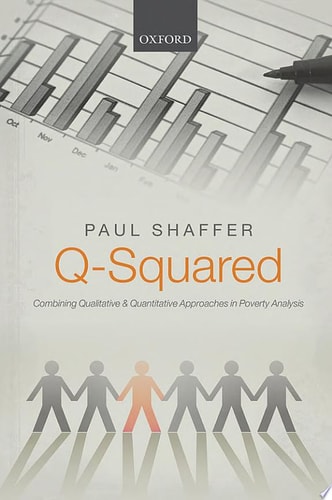
Q-Squared: Combining Qualitative and Quantitative Approaches in Poverty Analysis
0
0
As an Amazon Associate and affiliate partner, Menrva Books earns from qualifying purchases. Learn more
Author Description
This book examines the underlying assumptions and implications of how we conceptualise and investigate poverty. The empirical entry point for such inquiry is a series of research initiatives that have used mixed method, combined qualitative and quantitative, or Q-Squared ( Q2) approaches, to poverty analysis. The Q2 literature highlights the vast range of analytical tools within the social sciences that may be used to understand and explain social phenomena, along with interesting research results. This literature serves as a lens to probe issues about knowledge claims made in poverty debates concerning who are the poor (identification analysis) and why they are poor (causal analysis). Implicitly or explicitly, questions are raised about the reasons for emphasising different dimensions of poverty and favouring different units of knowledge, the basis for distinguishing valid and invalid claims, the meaning of causation, and the nature of causal inference, and so forth. Q2 provides an entry point to address foundational issues about assumptions underlying approaches to poverty, and applied issues about the strengths and limitations of different research methods and the ways they may be fruitfully combined. Together, the strands of this inquiry make a case for methodological pluralism on the grounds that knowledge is partial, empirical adjudication imperfect, social phenomena complex, and mixed methods add value for understanding and explanation. Ultimately, the goals of understanding and explanation are best served if research questions dictate the choice of methodological approach rather than the other way around.
Menrva's Summary
THE THESIS
This book investigates the methodological efficacy of combining qualitative and quantitative research techniques to better understand the complex nature of poverty. Paul Shaffer, an expert in development economics and poverty analysis, evaluates how mixed-method approaches—termed Q-Squared or Q2—can overcome the limitations of single-method studies. By examining the underlying assumptions of poverty research, the author argues that methodological pluralism is essential for capturing the multidimensional reality of social phenomena. The text provides a framework for researchers to align their methodological choices with specific research questions rather than adhering to rigid disciplinary silos.
THE SCOPE MAP
What You Will Find
- A comprehensive review of Q-Squared research initiatives in poverty analysis.
- Theoretical discussions on the nature of causal inference and knowledge claims in social science.
- Comparative analysis of the strengths and limitations of qualitative versus quantitative data collection.
- A robust argument for methodological pluralism based on the complexity of social phenomena.
THE AUTHORITY PERSPECTIVE
Experts recognize this work as a foundational text for scholars and practitioners interested in the integration of mixed methods within development studies. Readers frequently note the academic density of the prose, which serves as a rigorous guide for those navigating the intersection of economic data and sociological inquiry.
Page Count:
174
Publication Date:
2013-09-15
Publisher:
Oxford University Press, Usa
ISBN-10:
0199676917
ISBN-13:
9780199676910
Economics
Economics
Sociology
Social Science
Poverty
Community Tags
Other Editions(2)
Similar Books