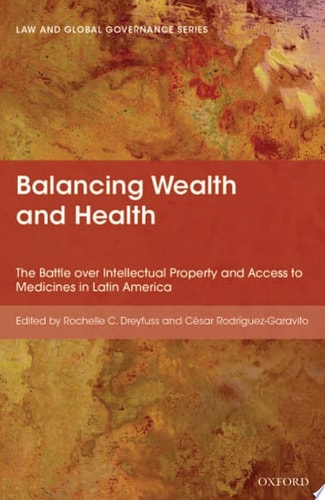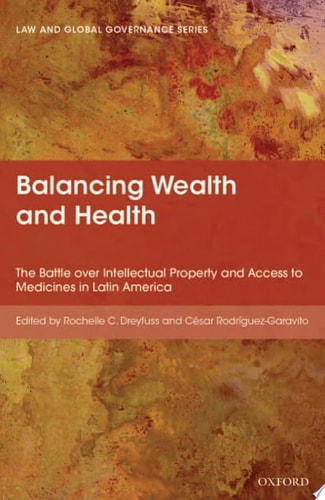
Balancing Wealth and Health: Law and Global Governance
0
0
As an Amazon Associate and affiliate partner, Menrva Books earns from qualifying purchases. Learn more
Author Description
This book focusses on the debates concerning aspects of intellectual property law that bear on access to medicines in a set of developing countries. Specifically, the contributors look at measures that regulate the acquisition, recognition, and use of patent rights on pharmaceuticals and trade secrets in data concerning them, along with the conditions under which these rights expire so as to permit the production of cheaper generic drugs. In addition, the book includes commentary from scholars in human rights, international institutions, and transnational activism.The case studies presented from 11 Latin American countries, have many commonalities in terms of economics, legal systems, and political histories, and yet they differ in the balance each has struck between proprietary interests and access concerns. The book documents this cross-country variation in legal norms and practice, identifies the factors that have led to differences in result, and theorizes as to how differentials among these countries occur and why they endure within a common transnational regulatory regime.The work concludes by putting the results of the investigations into a global administrative law frame and offers suggestions on institutional mechanisms for considering the trade-offs between health and wealth.
Menrva's Summary
THE THESIS
This book investigates how developing nations navigate the tension between intellectual property protections for pharmaceuticals and the urgent public health necessity of providing affordable access to medicine. The authors, César Rodríguez-Garavito and Rochelle C. Dreyfuss, assemble a multidisciplinary team of scholars to analyze how legal frameworks, trade agreements, and human rights considerations intersect in the pharmaceutical sector. By examining the regulatory landscape across Latin America, the text argues that despite shared transnational pressures, individual nations arrive at distinct outcomes based on local political and economic variables.
THE SCOPE MAP
What You Will Find
- Comparative analysis of patent law and trade secret regulations across 11 Latin American countries.
- Examination of the mechanisms governing generic drug production and market entry.
- Case studies utilizing legal, economic, and political science methodologies.
- A theoretical framework applying global administrative law to the trade-offs between proprietary interests and public health.
THE AUTHORITY PERSPECTIVE
Experts identify this work as a significant contribution to the study of global health governance and intellectual property law. Readers frequently note the academic density of the prose, which serves as a rigorous resource for scholars and policymakers interested in the intersection of international trade and human rights.
Page Count:
368
Publication Date:
2014-05-13
Publisher:
Oxford University Press
ISBN-10:
0199676747
ISBN-13:
9780199676743
Economics
Intellectual Property
Public Health
Drugs
Law
Human rights
Latin America
Community Tags
Similar Books