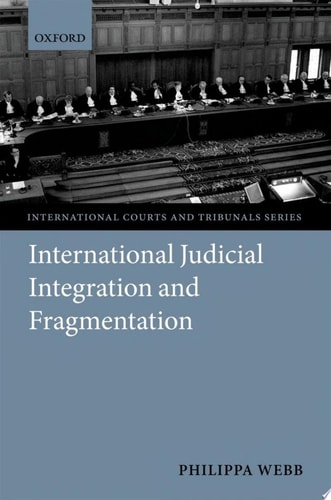
Judicial Integration and Fragmentation in the International Legal System
0
0
As an Amazon Associate and affiliate partner, Menrva Books earns from qualifying purchases. Learn more
Author Description
Fragmentation is one of the major debates within international law, but no detailed case studies have been made to show the problems that it creates, and how they can be addressed. This book asks whether the growing number of international judicial bodies render decisions that are largely consistent with one another, which factors influence this (in)consistency, and what this tells us about the development of international law by international courts and tribunals. It answers these questions by focusing on three areas of law, genocide, immunities, and the use of force, as in each of these areas different international judicial entities have dealt with cases stemming from the same situation and set of facts.The work focuses on four main courts: the International Court of Justice (ICJ), the International Criminal Court (ICC), the International Criminal Tribunal for the Former Yugoslavia (ICTY), and the International Criminal Tribunal for Rwanda (ICTR), which often interpret, apply, and develop the same legal principles, despite their different mandates and functions. It argues that judicial fragmentation is damaging to the international legal system, as coherent and compatible pronouncements on the law by international courts are vital to retaining the confidence of the international community. Ultimately, the book makes a plea for the importance of judicial integration for the stability and reliability of the international legal system.
Menrva's Summary
THE THESIS
This book investigates whether the proliferation of international judicial bodies results in consistent legal outcomes or damaging fragmentation within the international legal system. Philippa Webb, an expert in international law, examines the operational dynamics of major global courts to determine how their varying mandates influence the development of legal principles. By analyzing specific case studies where multiple tribunals address identical factual scenarios, the author argues that judicial integration is essential for maintaining the credibility and stability of international law.
THE SCOPE MAP
What You Will Find
- Comparative analysis of the International Court of Justice, International Criminal Court, International Criminal Tribunal for the Former Yugoslavia, and International Criminal Tribunal for Rwanda.
- Examination of legal consistency across three specific domains: genocide, immunities, and the use of force.
- Evaluation of the impact of judicial fragmentation on the international community's confidence in legal institutions.
- A proposed framework for enhancing judicial integration to ensure more compatible legal pronouncements.
THE AUTHORITY PERSPECTIVE
Legal scholars and practitioners frequently cite this work as a critical examination of the structural challenges facing modern international tribunals. Experts highlight the text for its rigorous methodology and its clear articulation of the risks posed by inconsistent judicial decision-making in the global arena.
Page Count:
288
Publication Date:
2013-06-14
Publisher:
Oxford University Press
ISBN-10:
019967115X
ISBN-13:
9780199671151
Violence law
Human rights
Genocide
Law
International Law
International relations
Community Tags
Similar Books