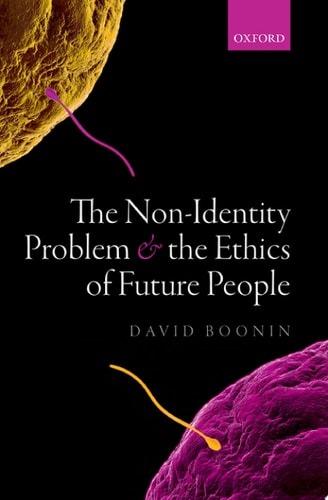
The Non-Identity Problem and the Ethics of Future People
0
0
As an Amazon Associate and affiliate partner, Menrva Books earns from qualifying purchases. Learn more
Author Description
David Boonin presents a new account of the non-identity problem: a puzzle about our obligations to people who do not yet exist. Our actions sometimes have an effect not only on the quality of life that people will enjoy in the future, but on which particular people will exist in the future to enjoy it. In cases where this is so, the combination of certain assumptions that most people seem to accept can yield conclusions that most people seem to reject. The non-identity problem has important implications both for ethical theory and for a number of topics in applied ethics, including controversial issues in bioethics, environmental ethics and disability ethics. It has been the subject of a great deal of discussion for nearly four decades, but this is the first book-length study devoted exclusively to its examination. Boonin begins by explaining what the problem is, why the problem matters, and what criteria a solution to the problem must satisfy in order to count as a successful one. He then provides a critical survey of the solutions to the problem that have thus far been proposed in the sizeable literature that the problem has generated and concludes by developing and defending an unorthodox alternative solution, one that differs fundamentally from virtually every other available approach.
Menrva's Summary
THE THESIS
This book investigates the non-identity problem, a philosophical puzzle concerning the moral obligations current generations hold toward individuals who do not yet exist. David Boonin, a prominent philosopher, examines how actions that determine the identity of future people challenge standard ethical frameworks. By analyzing the logical contradictions inherent in common moral assumptions, he constructs a rigorous argument that addresses the implications of these choices for bioethics, environmental policy, and disability rights.
THE SCOPE MAP
What You Will Find
- A comprehensive analysis of the non-identity problem and its historical development over four decades.
- A critical survey of existing philosophical solutions and their limitations.
- A detailed evaluation of the criteria required for a successful ethical resolution.
- The development and defense of an original, unorthodox alternative solution to the problem.
THE AUTHORITY PERSPECTIVE
Experts recognize this work as the first dedicated, book-length treatment of a complex problem that has long occupied ethical discourse. Scholars frequently note the clarity of Boonin's prose, which makes highly technical philosophical arguments accessible to both students and professionals in the field.
Page Count:
320
Publication Date:
2014-12-16
Publisher:
Oxford University Press
ISBN-10:
0199682933
ISBN-13:
9780199682935
Philosophy
Ethics
Metaphysics
Bioethics
Applied ethics
Community Tags
Similar Books