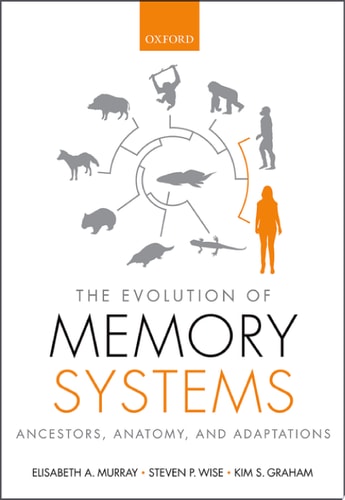
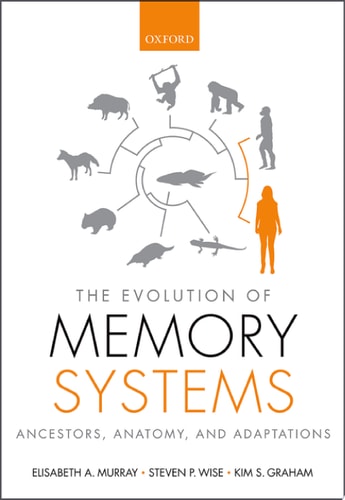
The Evolution of Memory Systems: Ancestors, Anatomy, and Adaptations
0
0
As an Amazon Associate and affiliate partner, Menrva Books earns from qualifying purchases. Learn more
Author Description
Current theories about human memory have been shaped by clinical observations and animal experiments. This doctrine holds that the medial temporal lobe subserves one memory system for explicit or declarative memories, while the basal ganglia subserves a separate memory system for implicit or procedural memories, including habits. Cortical areas outside the medial temporal lobe are said to function in perception, motor control, attention, or other aspects of executive function, but not in memory.'The Evolution of Memory Systems' advances dramatically different ideas on all counts. It proposes that several memory systems arose during evolution and that they did so for the same general reason: to transcend problems and exploit opportunities encountered by specific ancestors at particular times and places in the distant past.Instead of classifying cortical areas in terms of mutually exclusive perception, executive, or memory functions, the authors show that all cortical areas contribute to memory and that they do so in their own ways-using specialized neural representations. The book also presents a proposal on the evolution of explicit memory. According to this idea, explicit (declarative) memory depends on interactions between a phylogenetically ancient navigation system and a representational system that evolved in humans to represent one's self and others. As a result, people embed representations of themselves into the events they experience and the facts they learn, which leads to the perception of participating in events and knowing facts.'The Evolution of Memory Systems' is an important new work for students and researchers in neuroscience, psychology, and biology.
Menrva's Summary
THE THESIS
This book investigates the evolutionary origins of memory systems and challenges the traditional doctrine that memory functions are localized exclusively within the medial temporal lobe and basal ganglia. The authors, Elisabeth A. Murray, Kim S. Graham, and Steven Wise, synthesize clinical observations and animal research to argue that memory is a distributed function across cortical areas. They propose that memory systems evolved as adaptive mechanisms to solve specific environmental challenges faced by ancestors, rather than serving as static, isolated modules for perception or executive control.
THE SCOPE MAP
What You Will Find
- Comparative analysis of memory systems across different evolutionary lineages.
- A re-evaluation of cortical area functions, moving away from the perception-versus-memory dichotomy.
- Theoretical framework linking phylogenetically ancient navigation systems to the development of explicit memory.
- Discussion on how neural representations of the self and others facilitate declarative memory.
THE AUTHORITY PERSPECTIVE
Experts in the field recognize this work as a significant challenge to established neurobiological paradigms regarding memory localization. Researchers and students in neuroscience and psychology frequently cite this text for its detailed synthesis of evolutionary biology and cognitive function.
Page Count:
512
Publication Date:
2017-01-10
Publisher:
Oxford University Press
ISBN-10:
0199686432
ISBN-13:
9780199686438
Psychology
Biology
Memory
Neuroscience
Evolutionary Biology
Community Tags
Other Editions(2)
Similar Books







Reader Comments
Share Your Thoughts
No comments yet. Be the first to share your thoughts!