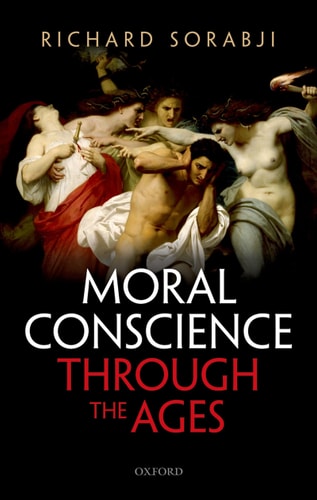
Moral Conscience through the Ages: Fifth Century BCE to the Present
0
0
As an Amazon Associate and affiliate partner, Menrva Books earns from qualifying purchases. Learn more
Author Description
In Moral Conscience through the Ages, Richard Sorabji brings his erudition and philosophical acumen to bear on a fundamental question: what is conscience? Examining the ways we have conceived of that little voice in our heads - our self-directed judge - he teases out its most enduring elements, the aspects that have survived from the Greek playwrights in the fifth century BCE through St Paul, the Church Fathers, Catholics and Protestants, all the way to the 17th centurys political unrest and the critics and champions of the eighteenth to twentieth centuries. Sorabji traces a history of conscience over this long period and examines an impressive breadth of recurrent topics: the longing for different kinds of freedom of conscience, the proper limits of freedom itself, protests at consciences being terrorized, dilemmas of conscience, the value of conscience to human beings, its secularization, its reliability, and ways to improve it. These historical issues are alive today, with fresh concerns about topics such as conscientious objection, the force of conscience, or the balance between freedoms of conscience, religion, and speech. The result is a stunningly comprehensive look at a central component of our moral understanding.
Menrva's Summary
THE THESIS
This book investigates the historical evolution and philosophical definition of conscience from the fifth century BCE to the modern era. Richard Sorabji, a distinguished scholar of ancient philosophy, utilizes a vast array of primary texts ranging from Greek drama to Enlightenment political theory to map the development of the internal moral judge. He argues that while the concept of conscience has undergone significant secularization and reinterpretation, its core function as a self-directed moral arbiter remains a central, albeit contested, component of human ethical life.
THE SCOPE MAP
What You Will Find
- A chronological analysis of conscience spanning from ancient Greek playwrights to twentieth-century political thinkers.
- Examination of theological perspectives including St. Paul and the Church Fathers alongside secular philosophical developments.
- Discussion of practical moral dilemmas such as conscientious objection, religious freedom, and the limits of speech.
- An exploration of the reliability and potential for improvement of the human conscience in both private and public spheres.
THE AUTHORITY PERSPECTIVE
Experts recognize this work as a comprehensive and rigorous historical survey of a complex philosophical concept. Readers frequently note the academic density of the prose, which provides a foundational resource for those interested in the intersection of ethics, history, and political theory.
Page Count:
288
Publication Date:
2014-11-27
Publisher:
OUP Oxford
ISBN-10:
0199685541
ISBN-13:
9780199685547
Religion
History
Philosophy
Politics
Intellectual History
Educational Resources
Ethics
Ethics & Morality
Community Tags
Similar Books