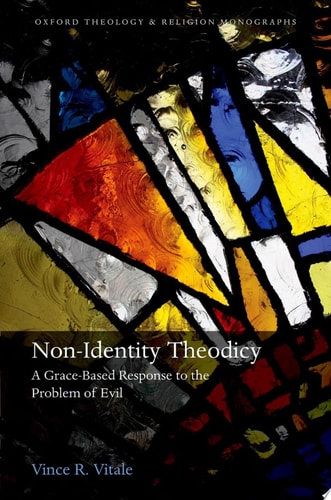
Non-Identity Theodicy: A Grace-Based Response to the Problem of Evil
0
0
As an Amazon Associate and affiliate partner, Menrva Books earns from qualifying purchases. Learn more
Author Description
This is an open access title available under the terms of a CC BY-NC-ND 4.0 International licence. It is free to read at Oxford Scholarship Online and offered as a free PDF download from OUP and selected open access locations.Questions as personal as those about suffering require a very personal response. However, the most popular responses to "the problem of evil" revolve around abstract discussions of greater goods, maximization of value, and best possible worlds, depicting God as at best an impartial bureaucrat and at worst a utility fanatic, rather than as a loving parent concerned first and foremost for his children. Vince R. Vitale develops Non-Identity Theodicy as an original response to the problem of evil. He begins by recognizing that horrendous evils pose distinctive challenges for belief in God. The book constructs an ethical framework for theodicy by sketching four cases of human action where horrendous evils are either caused, permitted, or risked, either for pure benefit or for harm avoidance. This framework is then brought to bear on the project of theodicy. The initial conclusions drawn impugn the dominant structural approach of depicting God as causing or permitting horrors in individual lives for the sake of some merely pure benefit. This approach is insensitive to relevant asymmetries in the justificatory demands made by horrendous and non-horrendous evil and in the justificatory work done by averting harm and bestowing pure benefit. Vitale then critiques theodicies that depict God as permitting or risking horrors in order to avert greater harm. The second half of this book develops a theodicy that falls outside of the proposed taxonomy. Non-Identity Theodicy suggests that God allows evil because it is a necessary condition of creating individual people whom he desires to love. This approach to theodicy is unique because the justifying good recommended is neither harm-aversion nor pure benefit. It is not a good that betters the lives of individua
Menrva's Summary
THE THESIS
How can the existence of horrendous evil be reconciled with a loving God without reducing the divine to an impartial bureaucrat or utility-focused entity? Vince R. Vitale, a scholar in theology and philosophy, challenges the traditional reliance on 'greater good' arguments. He proposes a Non-Identity Theodicy, which posits that the existence of specific individuals is inextricably linked to the conditions of a world containing evil, thereby shifting the focus from utilitarian harm-aversion to the relational necessity of creating unique persons.
THE SCOPE MAP
What You Will Find
- A critical taxonomy of four distinct cases of human action involving the causation, permission, or risk of horrendous evil.
- An ethical framework that evaluates the justificatory demands of harm-aversion versus the pursuit of pure benefit.
- A rigorous critique of standard theodicies that depict God as permitting suffering for the sake of abstract value maximization.
- The development of a unique theological model centered on the non-identity problem and the divine desire for individual relationship.
THE AUTHORITY PERSPECTIVE
Scholars and theologians identify this work as a significant contribution to contemporary analytic philosophy of religion. Readers frequently note the academic density of the prose, which is intended for those already familiar with the technical literature surrounding the problem of evil.
Page Count:
272
Publication Date:
2021-02-14
Publisher:
Oxford University Press
ISBN-10:
0198864221
ISBN-13:
9780198864226
Philosophy
Politics
Religion
Apologetics
Theology doctrinal
Ethics & Morality
Ethics
Theology
Community Tags
Similar Books