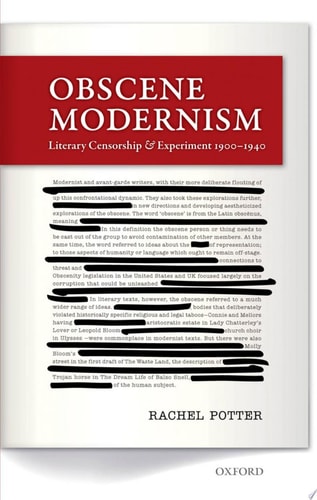
Obscene Modernism: Literary Censorship and Experiment, 1900-1940
0
0
As an Amazon Associate and affiliate partner, Menrva Books earns from qualifying purchases. Learn more
Author Description
During the period 1900-1940 novels and poems in the UK and US were subject to strict forms of censorship and control because of their representation of sex and sexuality. At the same time, however, writers were more interested than ever before in writing about sex and excrement, incorporating obscene slang words into literary texts, and exploring previously uncharted elements of the modern psyche. This book explores the far-reaching literary, legal and philosophical consequences of this historical conflict between law and literature. Alongside the famous prosecutions of D. H. Lawrence's The Rainbow and James Joyce's Ulysses huge numbers of novels and poems were altered by publishers and printers because of concerns about prosecution. Far from curtailing the writing of obscenity, however, censorship seemed to stimulate writers to explore it further. During the period covered by this book novels and poems became more experimentally obscene, and writers were intensely interested in discussing the author's rights to free speech, the nature of obscenity and the proper parameters of literature. Literature, seen as a dangerous form of corruption by some, was identified with sexual liberation by others. While legislators tried to protect UK and US borders from obscene literature, modernist publishers and writers gravitated abroad, a development that prompted writers to defend the international rights of banned authors and books. While the period 1900-1940 was one of the most heavily policed in the history of literature, it was also the time when the parameters of literature opened up and writers seriously questioned the rights of nation states to control the production and dissemination of literature.
Menrva's Summary
THE THESIS
This book investigates how the tension between legal censorship and modernist literary experimentation shaped the boundaries of literature in the UK and US between 1900 and 1940. Rachel Potter, a scholar of modernism and literary history, examines the paradox where strict legal controls over sexual representation actually catalyzed more daring artistic exploration. By analyzing the intersection of law, philosophy, and creative practice, the author argues that the policing of obscenity forced writers to redefine the parameters of free speech and the role of the state in cultural production.
THE SCOPE MAP
What You Will Find
- Historical analysis of literary censorship in the UK and US from 1900 to 1940.
- Examination of legal prosecutions involving seminal modernist works like Ulysses and The Rainbow.
- Discussion of the role of publishers and printers in self-censorship and text alteration.
- Exploration of the philosophical debate regarding authorial rights and the definition of obscenity.
THE AUTHORITY PERSPECTIVE
Scholars and critics recognize this work as a significant contribution to the study of modernist literary history and the legal constraints on artistic expression. The text is frequently cited for its detailed synthesis of archival research and its nuanced understanding of how state power influenced the evolution of twentieth-century literature.
Page Count:
247
Publication Date:
2013-10-22
Publisher:
Oxford University Press
ISBN-10:
0199680981
ISBN-13:
9780199680986
History
Legal History
Censorship
Law and literature
Literary Criticism
Modernism
Community Tags
Similar Books