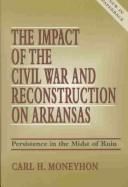
The Impact of the Civil War and Reconstruction on Arkansas
0
0
As an Amazon Associate and affiliate partner, Menrva Books earns from qualifying purchases. Learn more
Author Description
Arkansas has traditionally been overlooked by historians of the South, but Carl H. Moneyhon brings the state to the fore in this study. Examining the social history of Arkansas and focusing on changes brought by the Civil War's devastation and political aftermath, Moneyhon presents a highly readable history of this turbulent time. Contributing to the historical debate over continuity and change in the Old South and New South, Moneyhon persuasively argues in favor of continuity. In the years after Reconstruction, the antebellum elite ruled a society that resisted modernization. As a result, the lives of most Arkansans in 1900 were not greatly different from what they had been half a century before - the state was overwhelmingly rural and beset by poverty, racism, poor education, and economic backwardness. The most profound effects of war, Moneyhon explains, were on white yeoman farmers and the lower classes, both black and white. The large landowners, with their political connections, felt the war much less than the working class. Their survival led to the most important aspect of post-Civil War society in Arkansas: the elite maintained or soon regained their positions of power, thus preserving the status quo. Divided into three parts, this work first treats Arkansas in the decade before the war, with comprehensive chapters on the economy, white society, slavery, and the political system. The second part deals with the war years, with one chapter focusing on the areas that remained under Confederate control and another on areas in which military operations occurred; two other chapters describe the emancipation of the slaves and efforts during the war to institute a Unionist government. The third section is a masterly examination of the politics of Reconstruction and Redemption in Arkansas, the state's postwar economy, and the experience of the former slaves. Prodigiously researched and gracefully written, The Impact of the Civil War and Reconstruction on Arkansa
Menrva's Summary
THE THESIS
The Civil War and Reconstruction profoundly reshaped Arkansas, yet the state's antebellum social and economic structures largely persisted. Carl H. Moneyhon's study examines the social history of Arkansas, focusing on the devastation and political aftermath of the Civil War. He argues for continuity between the Old South and the New South, asserting that the antebellum elite maintained power, resisting modernization and leaving most Arkansans in 1900 little different from their state's condition fifty years prior. The war's most significant impacts were felt by white yeoman farmers and the lower classes, both black and white, while large landowners leveraged political connections to preserve the status quo.
THE SCOPE MAP
- An examination of Arkansas in the decade preceding the Civil War, including its economy, white society, slavery, and political system.
- Coverage of the war years, detailing conditions in Confederate-controlled areas and those affected by military operations.
- An analysis of emancipation and efforts to establish a Unionist government during the war.
- A detailed study of Reconstruction and Redemption politics in Arkansas.
- An exploration of the state's postwar economy.
- An account of the experiences of former slaves in Arkansas.
THE AUTHORITY PERSPECTIVE
This work is recognized for its detailed research and graceful writing, bringing a traditionally overlooked state to the forefront of Civil War and Reconstruction scholarship. Moneyhon's argument for continuity in Arkansas's social and economic structures post-Reconstruction contributes significantly to historical debates about the Old and New South. The book is structured to provide a comprehensive view, beginning with the antebellum period and progressing through the war and Reconstruction. Its focus on the experiences of various social classes, particularly yeoman farmers and the lower classes, offers a nuanced perspective on the war's impact.
Page Count:
288
Publication Date:
1994-01-01
ISBN-10:
0807118400
History
Non-Fiction
Civil War
Reconstruction Era
American History
Community Tags
Similar Books














