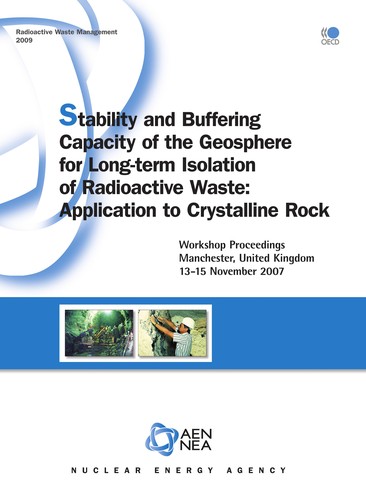
Stability and Buffering Capacity of the Geosphere for Long-Term Isolation of Radioactive Waste
0
0
As an Amazon Associate and affiliate partner, Menrva Books earns from qualifying purchases. Learn more
Author Description
Geological settings selected as potential host formations for the deep geological disposal of radioactive waste are chosen for, among other assets, their long-term stability and buffering capacity against destabilizing events and processes. These proceedings present the outcomes of a geosphere stability workshop, held in November 2007, that focused on crystalline and other types of hard, fractured rocks. The workshop underscored the fact that many such rocks are intrinsically stable environments that evolve extremely slowly and provide good buffering against external events and processes. The proceedings show understanding of the processes and events that can affect crystalline rocks and, although there is less confidence in predicting exactly when and where such events will occur and the volume of rock that will be affected, the extent of the impacts on a geological repository can be confidently addressed using bounding approaches supported by geological information from similar sites around the world.--Publisher's description.
Menrva's Summary
THE THESIS
The long-term isolation of radioactive waste hinges on the inherent stability and buffering capabilities of geological formations. This book presents the findings of a November 2007 workshop focused on crystalline and other hard, fractured rocks as potential host formations for deep geological disposal. It highlights that these rocks offer intrinsically stable environments that change very slowly and effectively buffer against disruptive events. While precise prediction of the timing and location of such events remains challenging, the proceedings demonstrate how bounding approaches, supported by global geological data, can confidently address the potential impacts on geological repositories.
THE SCOPE MAP
- Analysis of geological settings chosen for radioactive waste disposal.
- Outcomes of a geosphere stability workshop focusing on crystalline and hard, fractured rocks.
- Discussion of the intrinsic stability and slow evolution of these rock types.
- Examination of buffering capacities against destabilizing events and processes.
- Methodologies for addressing the extent of impacts on geological repositories using bounding approaches.
- Geological information from similar sites worldwide used to support predictions.
THE AUTHORITY PERSPECTIVE
The proceedings from the 2007 geosphere stability workshop underscore the robust nature of crystalline and hard, fractured rocks for long-term radioactive waste isolation. The consensus presented indicates that these formations offer significant inherent stability and buffering capacity against geological disturbances. While acknowledging uncertainties in predicting the exact timing and scale of future events, the work emphasizes the confidence achievable in managing repository impacts through established geological data and bounding approaches. This collection of outcomes serves as a technical reference for the scientific community involved in radioactive waste management.
Page Count:
301
Publication Date:
2009-01-01
ISBN-10:
9264060561
ISBN-13:
9789264060562
Science
Non-Fiction
Nuclear Energy
Engineering
Geology
Community Tags
Similar Books